
Arduino UNO R4 WiFi Bluetooth Analoge Meter Voorbeeld - Meter Weergave via BLE Tutorial
Overzicht
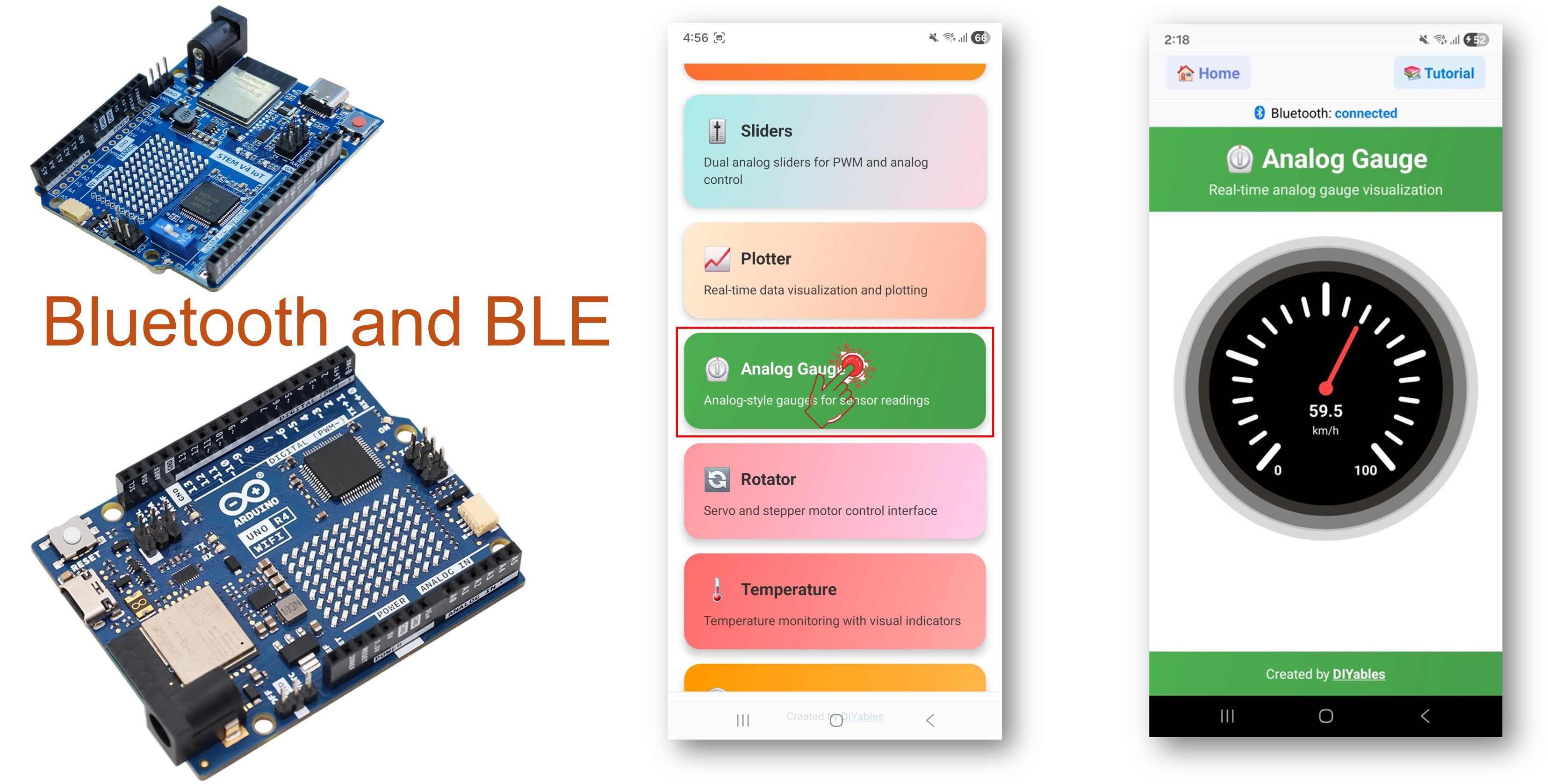
Het Bluetooth Analoge Meter voorbeeld biedt een visuele analoge-stijl meter weergave via de DIYables Bluetooth STEM app. Ontworpen voor Arduino UNO R4 WiFi met BLE (Bluetooth Low Energy) — geef elke analoge waarde weer op een mooie meter met configureerbaar bereik en eenheid op uw smartphone. Perfect voor snelheidsmeters, drukmeters, RPM displays, en elke waarde die baat heeft bij een wijzerplaat-visualisatie.
Opmerking: De Arduino UNO R4 WiFi ondersteunt alleen BLE (Bluetooth Low Energy). Het ondersteunt geen Classic Bluetooth. De DIYables Bluetooth App ondersteunt zowel BLE als Classic Bluetooth op Android, en BLE op iOS. Omdat dit board BLE gebruikt, werkt de app op zowel Android als iOS.
Functies
- Analoge Meter Weergave: Mooie wijzerplaat-stijl meter op smartphone
- Configureerbaar Bereik: Stel minimum en maximum waarden in
- Aangepaste Eenheid: Geef km/h, RPM, PSI, of elke aangepaste eenheid weer
- Snelle Updates: Tot 5 updates per seconde (200ms interval)
- On-Demand Verzoek: App kan huidige waarde opvragen
- Werkt op Android & iOS: BLE wordt ondersteund op beide platformen
- Geen Koppeling Vereist: BLE verbindt automatisch zonder handmatige koppeling
Benodigde Hardware
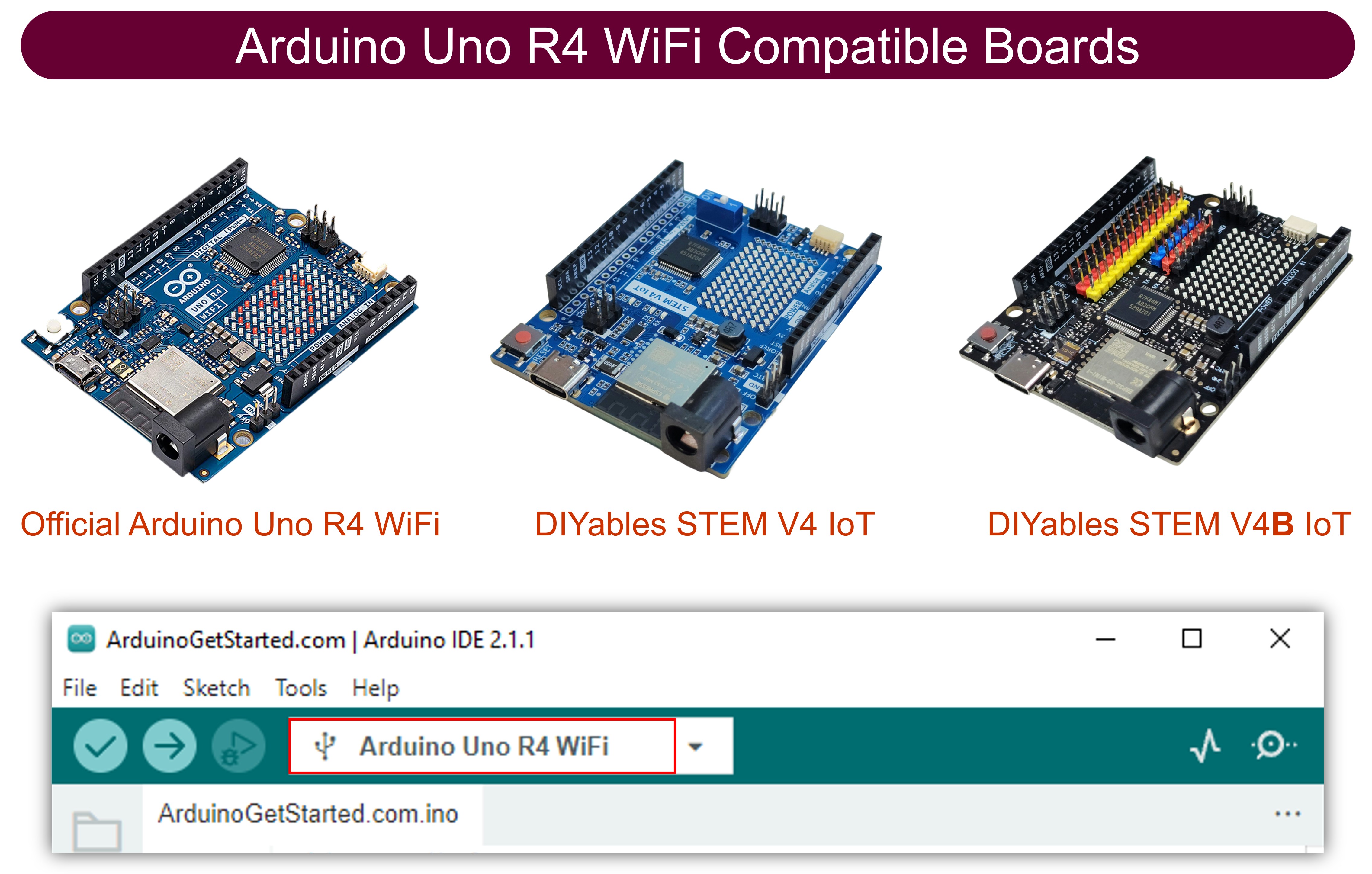
Of u kunt de volgende kits kopen:
| 1 | × | DIYables STEM V4 IoT Starterskit (Arduino inbegrepen) | |
| 1 | × | DIYables STEM V4B IoT Starterskit (Arduino inbegrepen) | |
| 1 | × | DIYables Sensorkit (18 sensoren/displays) |
Arduino UNO R4 WiFi Code
Snelle Stappen
Volg deze instructies stap voor stap:
- Als dit uw eerste keer is met de Arduino UNO R4 WiFi, raadpleeg de Arduino UNO R4 WiFi aan de slag gids.
- Verbind het Arduino UNO R4 WiFi board met uw computer via een USB-kabel.
- Start de Arduino IDE op uw computer.
- Selecteer Arduino UNO R4 WiFi board en de juiste COM-poort.
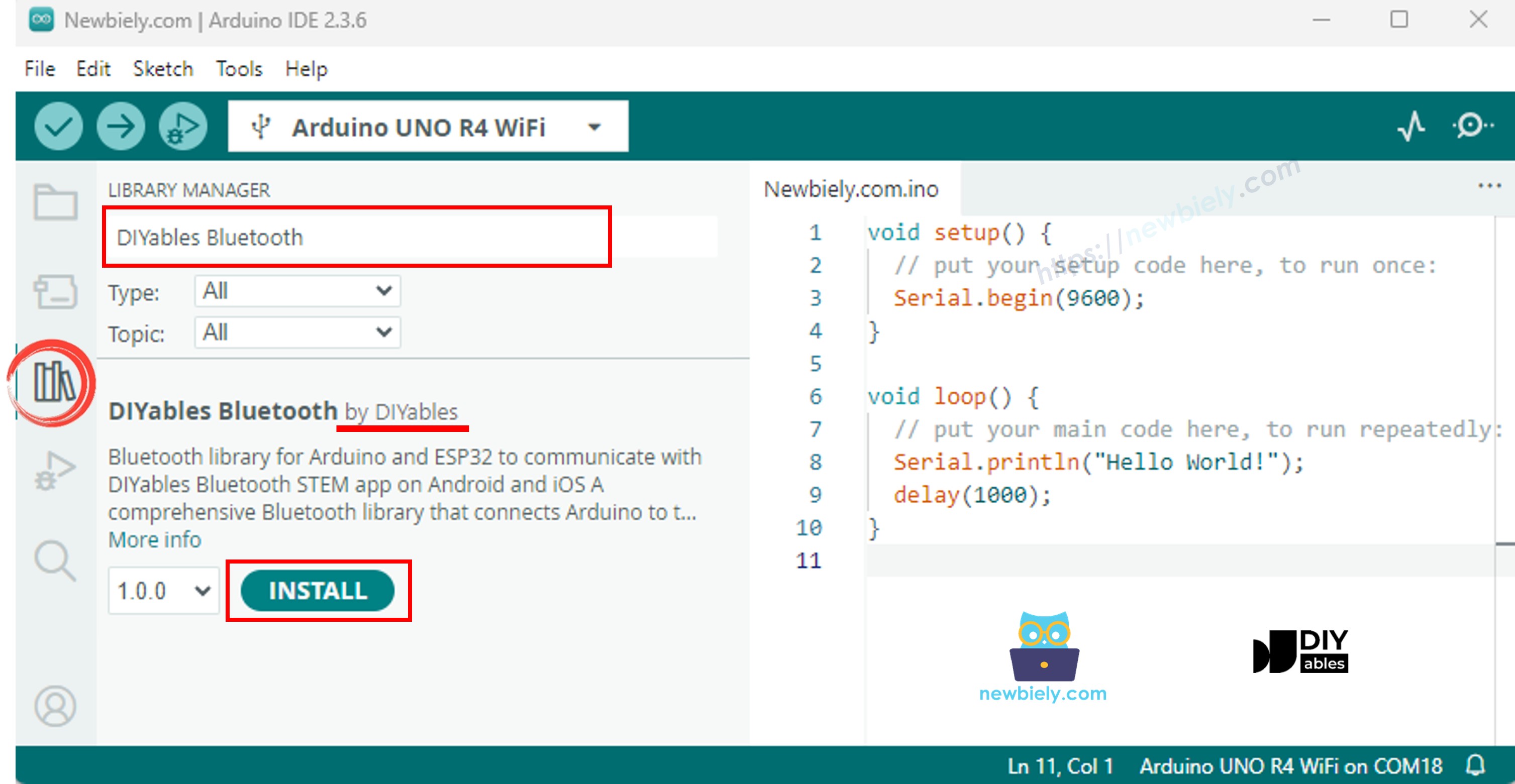
- Navigeer naar het Libraries icoon in de linker balk van de Arduino IDE.
- Zoek "DIYables Bluetooth", vind vervolgens de DIYables Bluetooth bibliotheek door DIYables
- Klik op de Install knop om de bibliotheek te installeren.
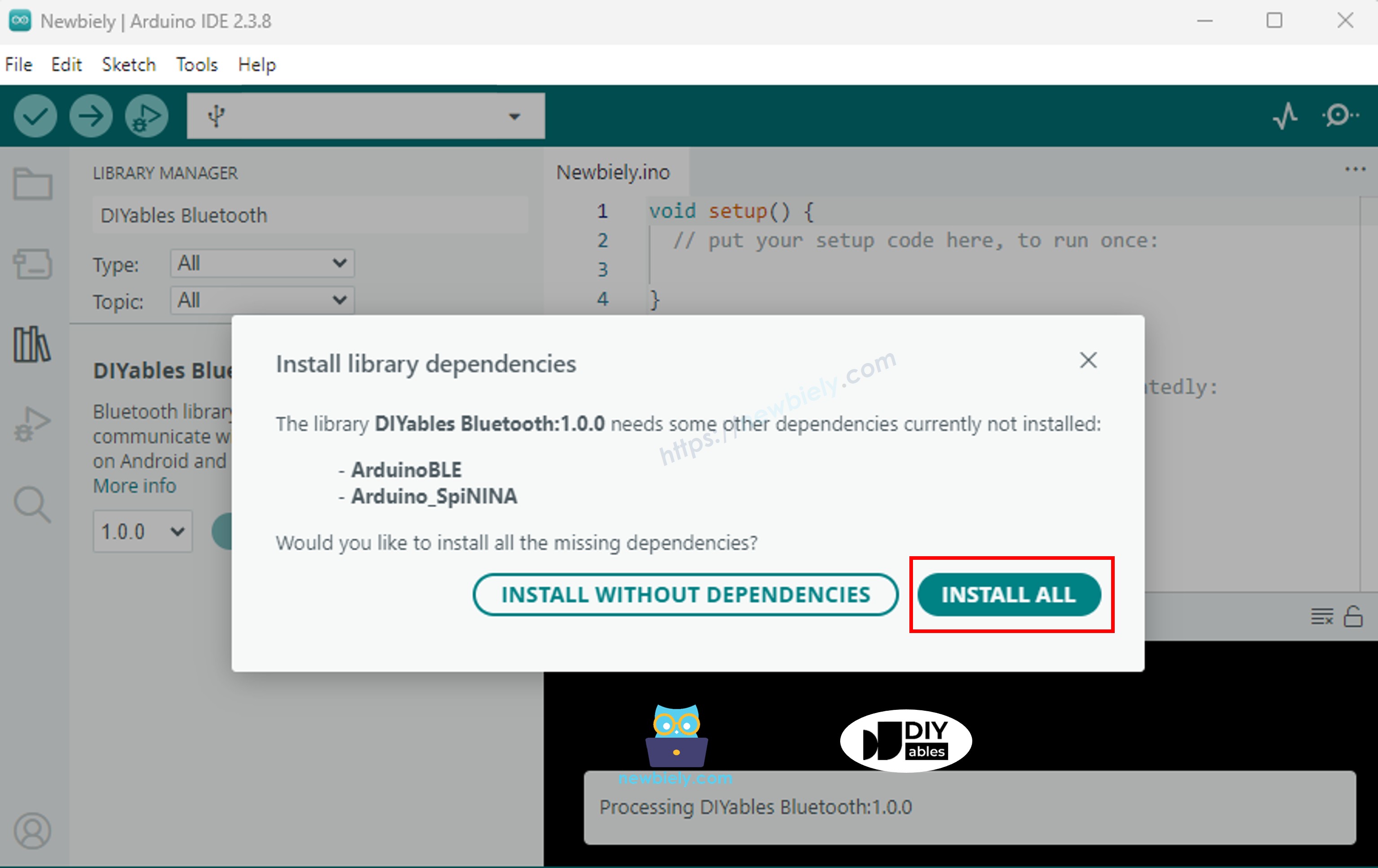
- U wordt gevraagd om enkele andere bibliotheek afhankelijkheden te installeren
- Klik op de Install All knop om alle bibliotheek afhankelijkheden te installeren.
BLE Code
- Ga in Arduino IDE naar File Examples DIYables Bluetooth ArduinoBLE_AnalogGauge voorbeeld, of kopieer de bovenstaande code en plak het in de editor van Arduino IDE
- Klik op de Upload knop in Arduino IDE om code naar Arduino UNO R4 WiFi te uploaden
- Open de Serial Monitor
- Bekijk het resultaat in Serial Monitor. Het ziet er als volgt uit:
Mobiele App
Opmerking: De DIYables Bluetooth App ondersteunt zowel BLE als Classic Bluetooth op Android, en BLE op iOS. Omdat de Arduino UNO R4 WiFi BLE gebruikt, werkt de app op zowel Android als iOS. Handmatige koppeling is niet nodig voor BLE — gewoon scannen en verbinden.
- Open de DIYables Bluetooth App
- Bij het eerste openen van de app wordt u om toestemming gevraagd. Verleen de volgende:
- Nearby Devices toestemming (Android 12+) / Bluetooth toestemming (iOS) - vereist om Bluetooth-apparaten te scannen en te verbinden
- Location toestemming (alleen Android 11 en lager) - vereist door oudere Android versies om BLE apparaten te scannen
- Zorg ervoor dat Bluetooth is ingeschakeld op uw telefoon
- Tik op het startscherm op de Connect knop. De app zal scannen naar BLE apparaten.
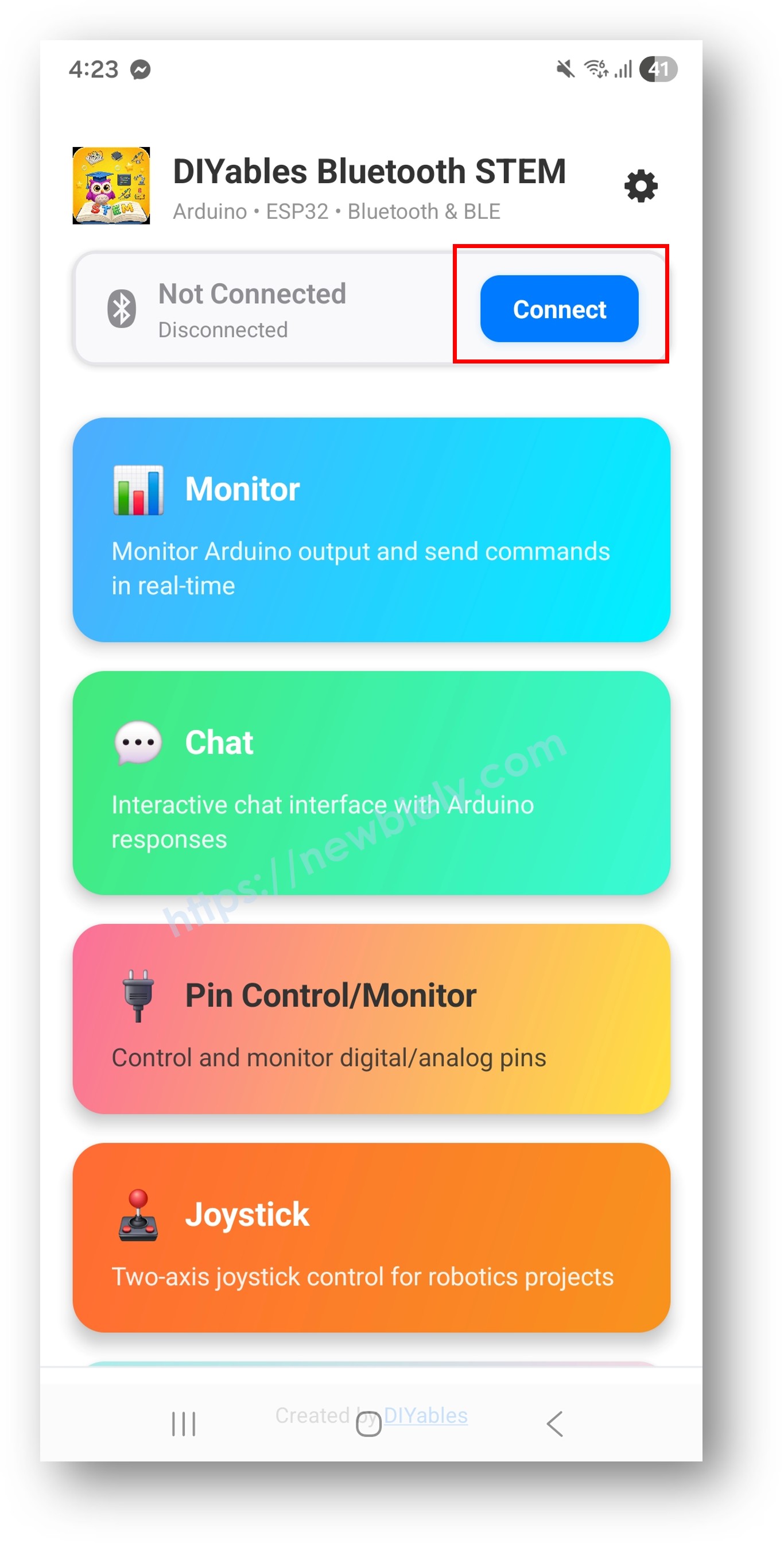
- Zoek en tik op "Arduino_Gauge" in de scanresultaten om te verbinden.
- Zodra verbonden, gaat de app automatisch terug naar het startscherm. Selecteer de Analog Gauge app uit het app menu.
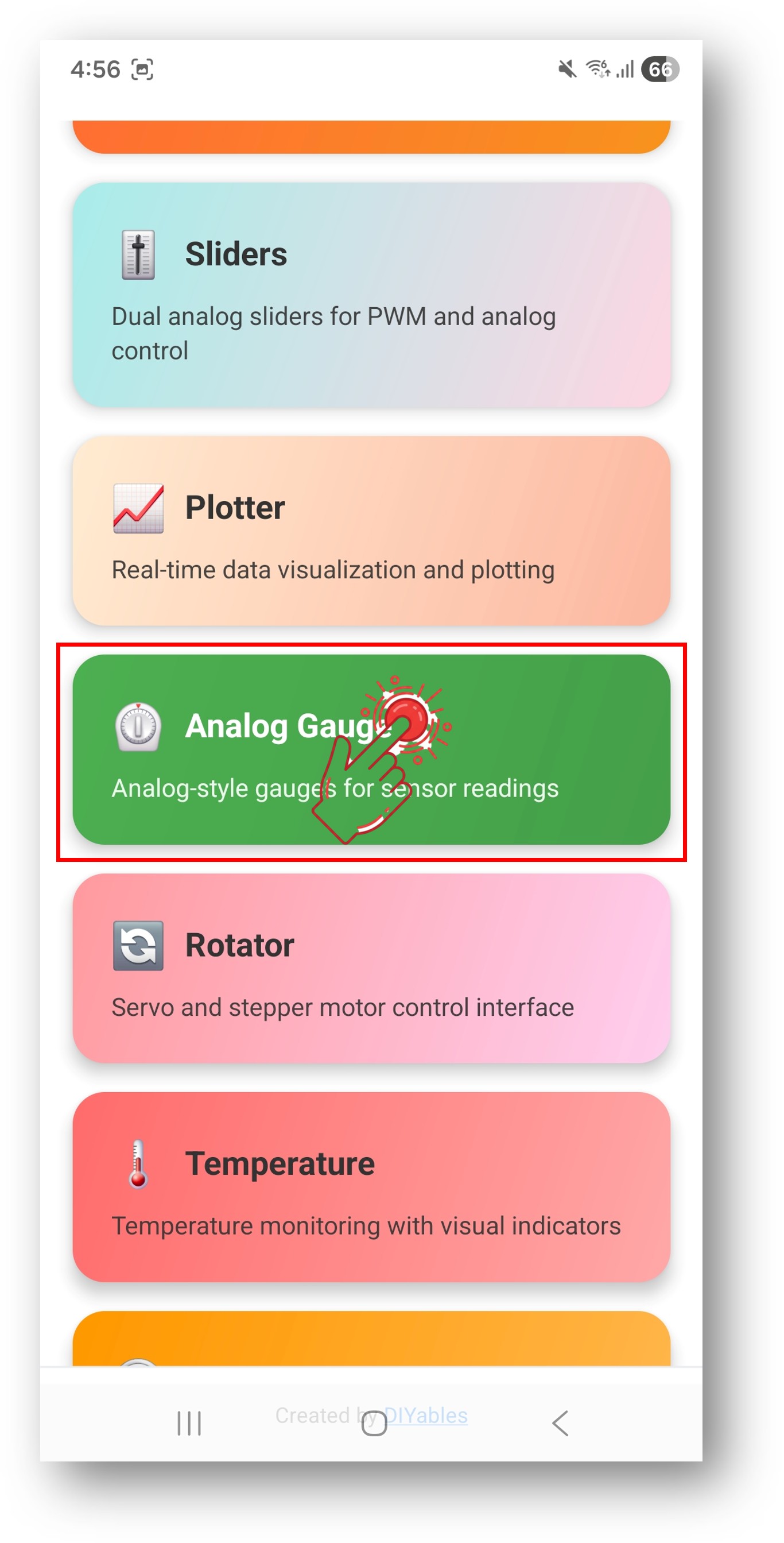
Opmerking: U kunt op het instellingen icoon op het startscherm tikken om apps op het startscherm te verbergen/tonen. Voor meer details, zie de DIYables Bluetooth App Gebruikershandleiding.
- U ziet een analoge meter die waarden weergeeft met een vloeiende naaldbeweging, die een snelheidsmeter simuleert
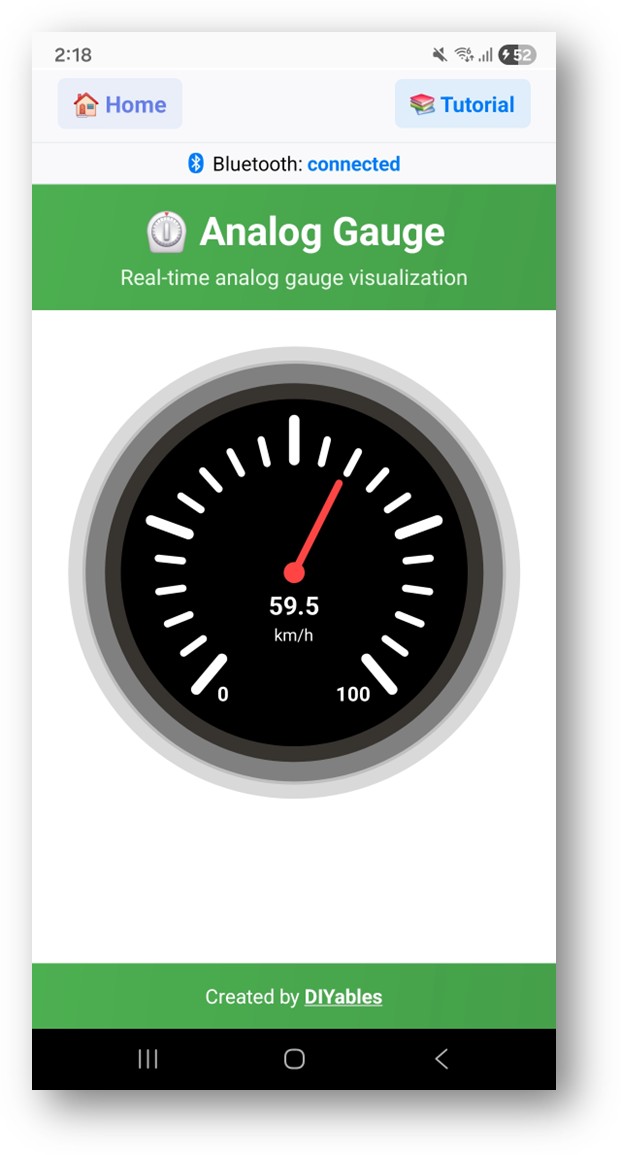
Kijk nu terug naar de Serial Monitor in Arduino IDE. U ziet:
Creatieve Aanpassing - Pas de Code aan Uw Project Aan
Configureer Meter Bereik en Eenheid
Verzend Meter Waarden
Behandel Waarde Verzoeken
Programmeervoorbeelden
Potentiometer Meter
Batterij Niveau Monitor
Probleemoplossing
Veelvoorkomende Problemen
1. Kan het apparaat niet vinden in de app
- Zorg ervoor dat de Arduino UNO R4 WiFi is ingeschakeld en de sketch is geüpload
- Zorg ervoor dat Bluetooth op uw telefoon is ingeschakeld
- Schakel op Android 11 en lager ook Location services in
2. Meter wordt niet bijgewerkt
- Controleer of send() wordt aangeroepen in de loop
- Verifieer de timing van het update interval
- Zorg ervoor dat bluetoothServer.loop() wordt aangeroepen
3. Meter toont verkeerd bereik
- Controleer de min/max waarden in de constructor
- Zorg ervoor dat de eenheid string correct is
- Waarden buiten het bereik worden afgekapt
4. Naald springt erratisch
- Voeg afvlakking of gemiddeling toe aan sensor aflezingen
- Verminder update frequentie indien nodig
- Controleer op ruis in analoge ingangen
5. Upload mislukt of board niet herkend
- Installeer het laatste Arduino UNO R4 board pakket via Board Manager
- Probeer een andere USB-kabel of poort
Projectideeën
- Snelheidsmeter voor RC auto
- Drukmeter voor pneumatische systemen
- Batterij niveau indicator
- RPM meter voor motoren
- Signaalsterkte meter
Volgende Stappen
Na het beheersen van het Bluetooth Analoge Meter voorbeeld, probeer:
- Bluetooth Temperature - Voor temperatuur-specifieke meter
- Bluetooth Plotter - Voor data over tijd
- Bluetooth Slider - Voor het instellen van waarden terug naar Arduino
- Meerdere Bluetooth Apps - Combineer meter met andere apps
Ondersteuning
Voor extra hulp:
- Bekijk de API Reference documentatie
- Bezoek DIYables tutorials
- Arduino community forums
Gerelateerde Tutorials
📱 Aanbevolen apps
 English for KidsSpelenderwijs Engels leren voor jonge kinderen.Ontdek het opGoogle PlayBeschikbaar in deApp Store
 Bubble NoteZelfverwijderende notities – schrijf ze als berichten.Ontdek het opGoogle PlayBeschikbaar in deApp Store
 Didn't BuyVersla impulsaankopen en bespaar meer.Ontdek het opGoogle PlayBeschikbaar in deApp Store
 Knowledge PathOefentoetsen om alles te leren.Ontdek het opGoogle PlayBeschikbaar in deApp Store