
Arduino WebMonitor Voorbeeld - Web-Gebaseerde Seriële Monitor Tutorial
Overzicht
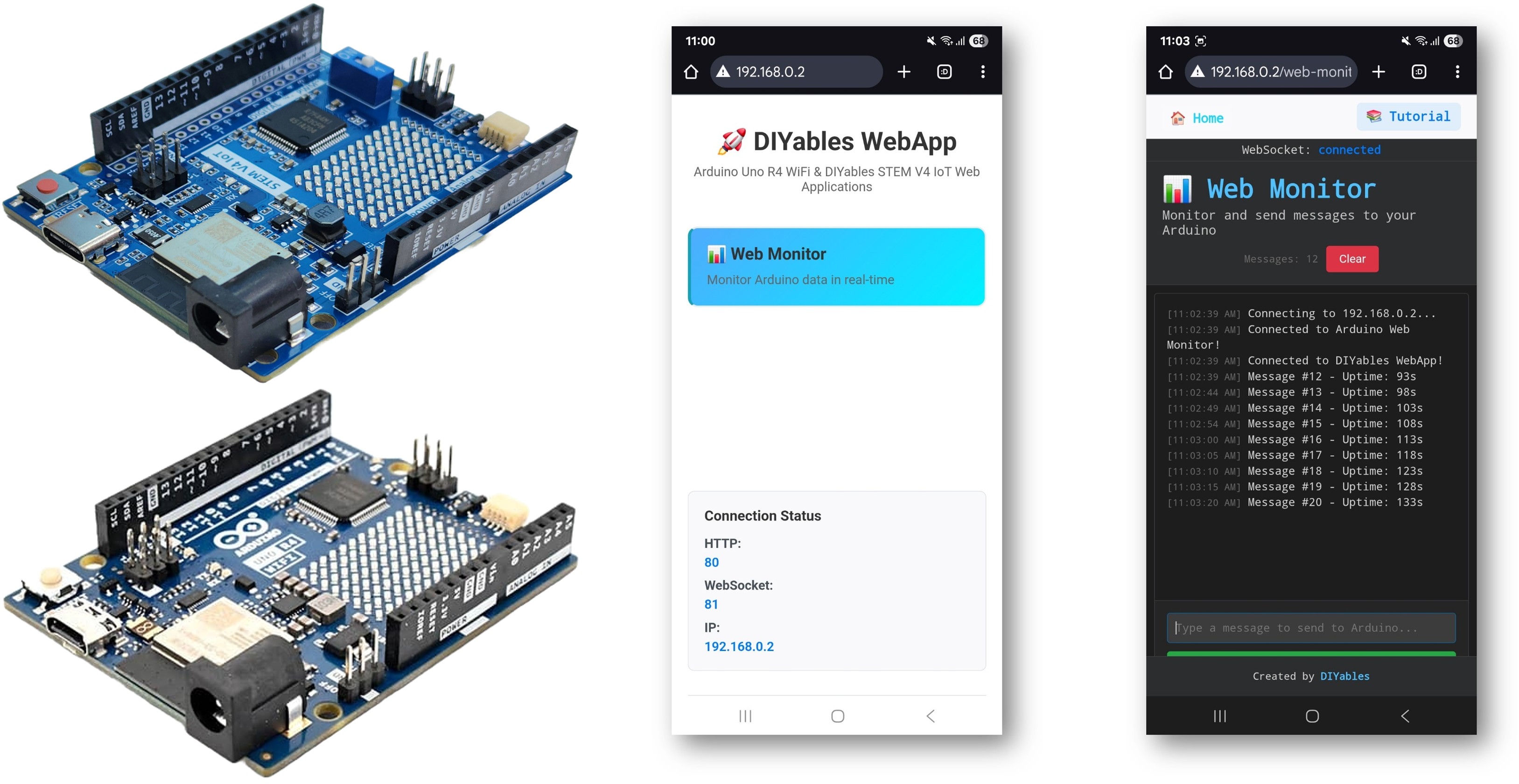
Het WebMonitor voorbeeld vervangt de traditionele Seriële Monitor met een web-gebaseerde interface die toegankelijk is vanaf elk apparaat op uw netwerk. Ontworpen voor Arduino Uno R4 WiFi en DIYables STEM V4 IoT educatief platform met verbeterde IoT-mogelijkheden, ingebouwde sensor monitoring, en naadloze integratie met het educatieve ecosysteem.
Functies
- Realtime Seriële Uitvoer: Bekijk Arduino berichten direct in browser
- Commando Invoer: Stuur commando's vanaf web interface naar Arduino
- Donker Thema: Oogvriendelijke terminal-stijl interface
- Automatisch Scrollen: Scrolt automatisch naar nieuwste berichten
- Tijdstempel: Alle berichten bevatten tijdstempels
- Commando Geschiedenis: Navigeer door vorige commando's met pijltjestoetsen
- Wis Functie: Wis de monitor weergave
- Kopiëren/Plakken: Volledige tekstselectie en kopieer ondersteuning
- Platform Uitbreidbaar: Momenteel geïmplementeerd voor Arduino Uno R4 WiFi, maar kan worden uitgebreid voor andere hardware platforms. Zie DIYables_WebApps_ESP32
Benodigde Hardware
Of u kunt de volgende kits kopen:
| 1 | × | DIYables STEM V4 IoT Starterskit (Arduino inbegrepen) | |
| 1 | × | DIYables STEM V4B IoT Starterskit (Arduino inbegrepen) | |
| 1 | × | DIYables Sensorkit (18 sensoren/displays) |
Setup Instructies
Snelle Stappen
Volg deze instructies stap voor stap:
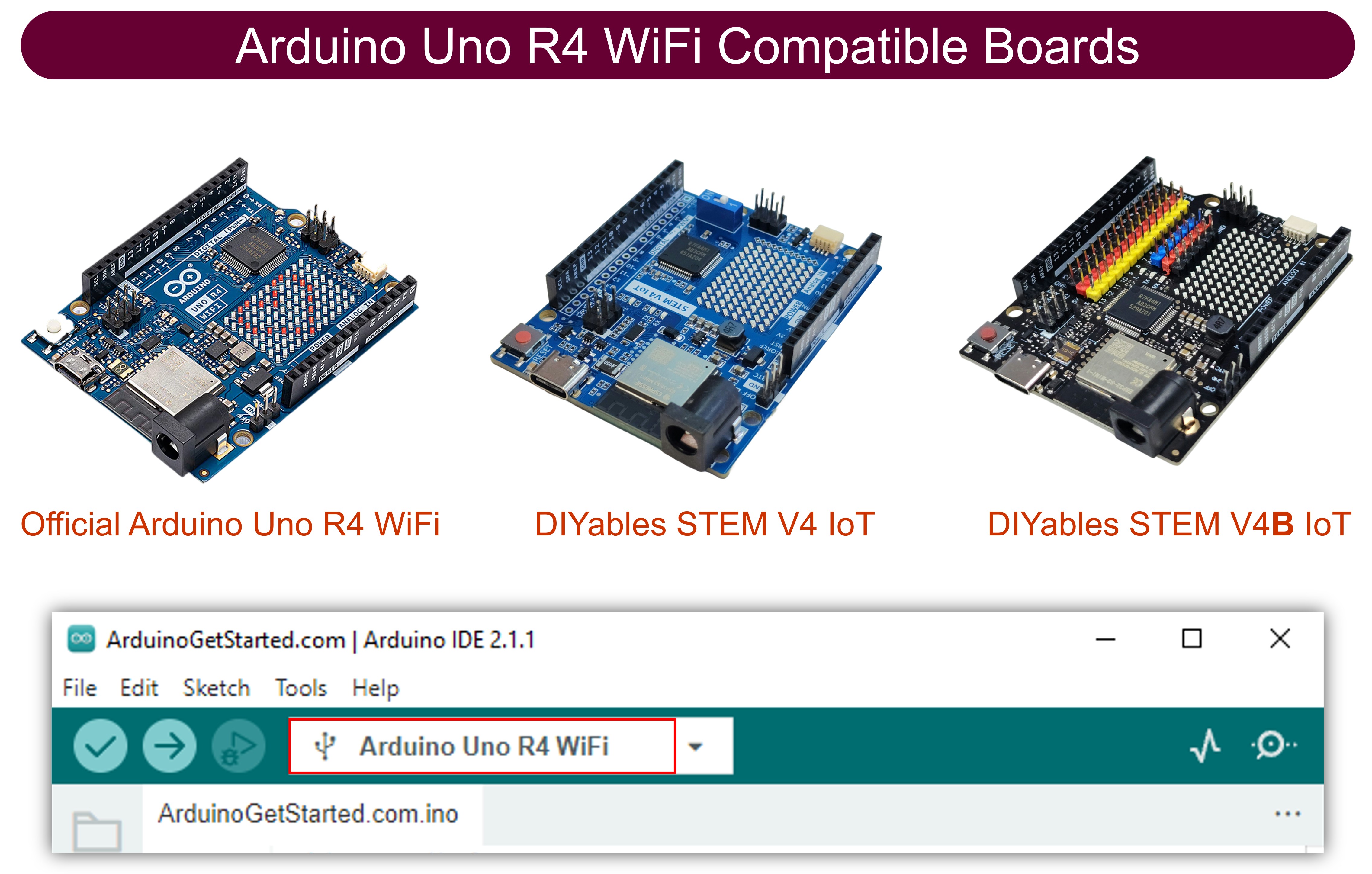
- Als dit uw eerste keer is met de Arduino Uno R4 WiFi/DIYables STEM V4 IoT, raadpleeg de tutorial over het instellen van de omgeving voor Arduino Uno R4 WiFi/DIYables STEM V4 IoT in de Arduino IDE.
- Verbind het Arduino Uno R4/DIYables STEM V4 IoT board met uw computer via een USB-kabel.
- Start de Arduino IDE op uw computer.
- Selecteer het juiste Arduino Uno R4 board (bijv., Arduino Uno R4 WiFi) en COM-poort.
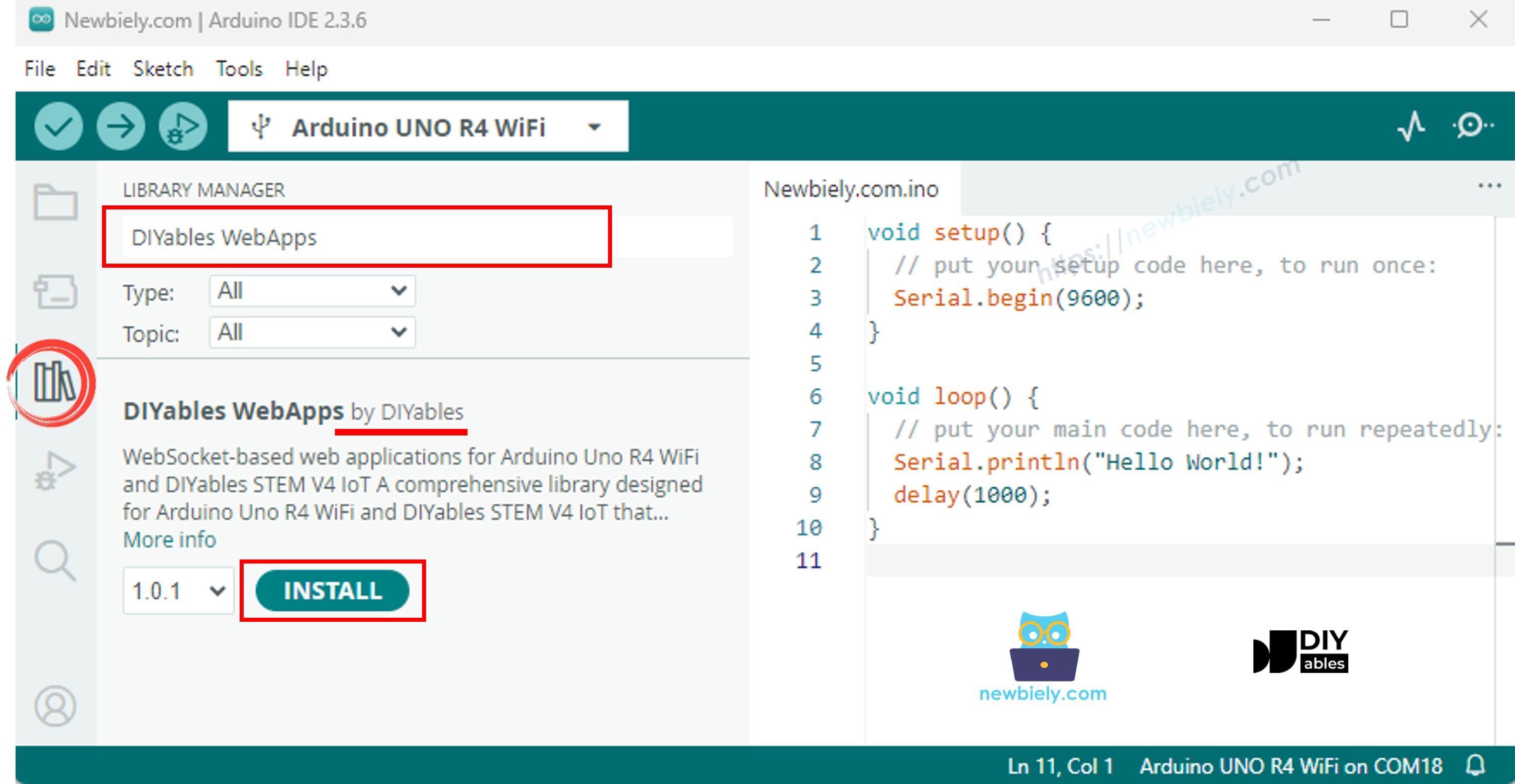
- Navigeer naar het Libraries pictogram in de linker balk van de Arduino IDE.
- Zoek "DIYables WebApps", vind dan de DIYables WebApps bibliotheek van DIYables
- Klik op de Install knop om de bibliotheek te installeren.
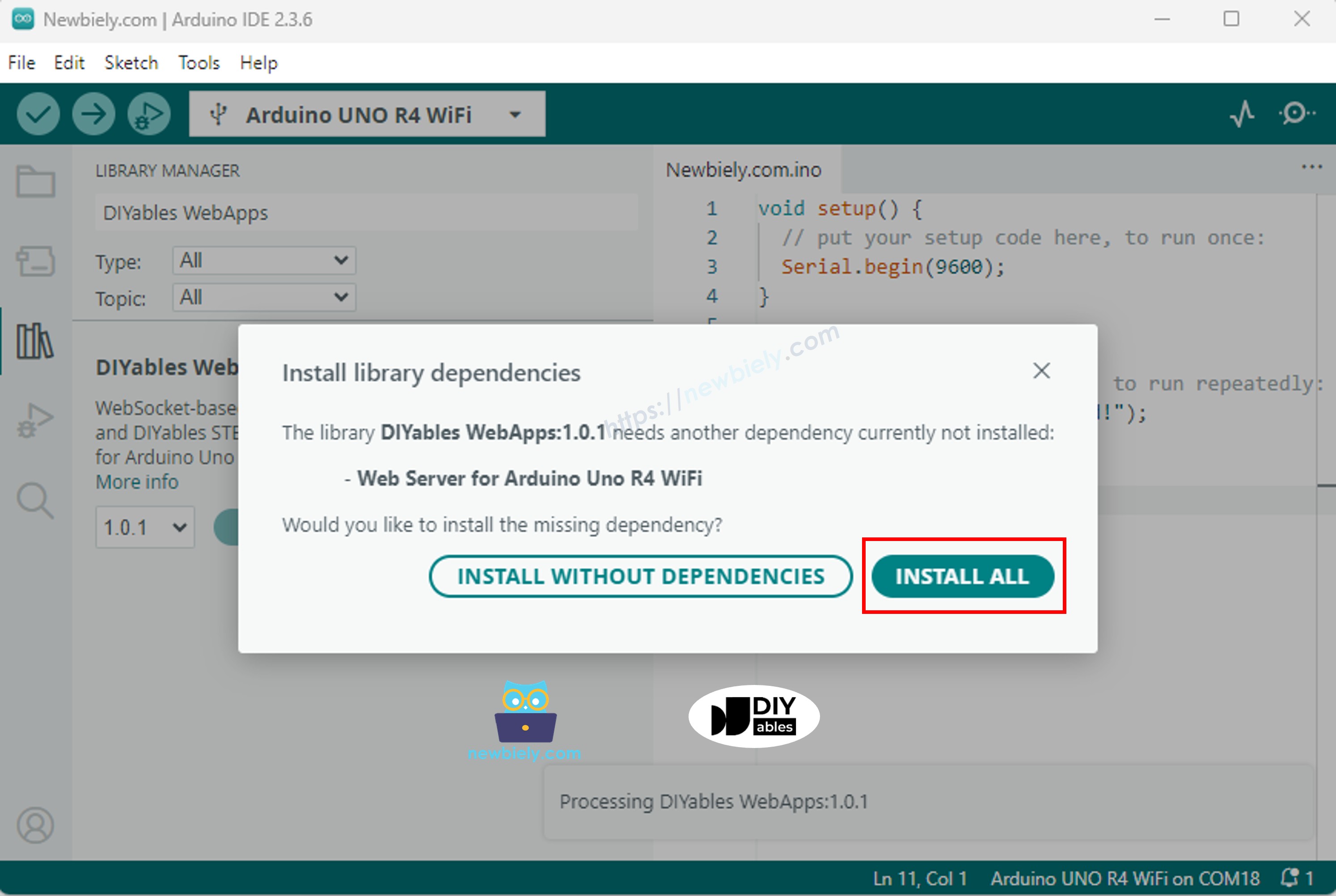
- U wordt gevraagd om enkele andere bibliotheek afhankelijkheden te installeren
- Klik op de Install All knop om alle bibliotheek afhankelijkheden te installeren.
- Ga in Arduino IDE naar File Examples DIYables WebApps WebMonitor voorbeeld, of kopieer de bovenstaande code en plak deze in de editor van Arduino IDE
- Configureer WiFi-inloggegevens in de code door deze regels bij te werken:
- Klik op de Upload knop in Arduino IDE om code naar Arduino UNO R4/DIYables STEM V4 IoT te uploaden
- Open de Seriële Monitor
- Bekijk het resultaat in Seriële Monitor. Het ziet er als volgt uit
- Als u niets ziet, herstart het Arduino board.
- Noteer het weergegeven IP-adres en voer dit adres in de adresbalk van een webbrowser op uw smartphone of PC in.
- Voorbeeld: http://192.168.0.2
- U ziet de homepagina zoals onderstaande afbeelding:
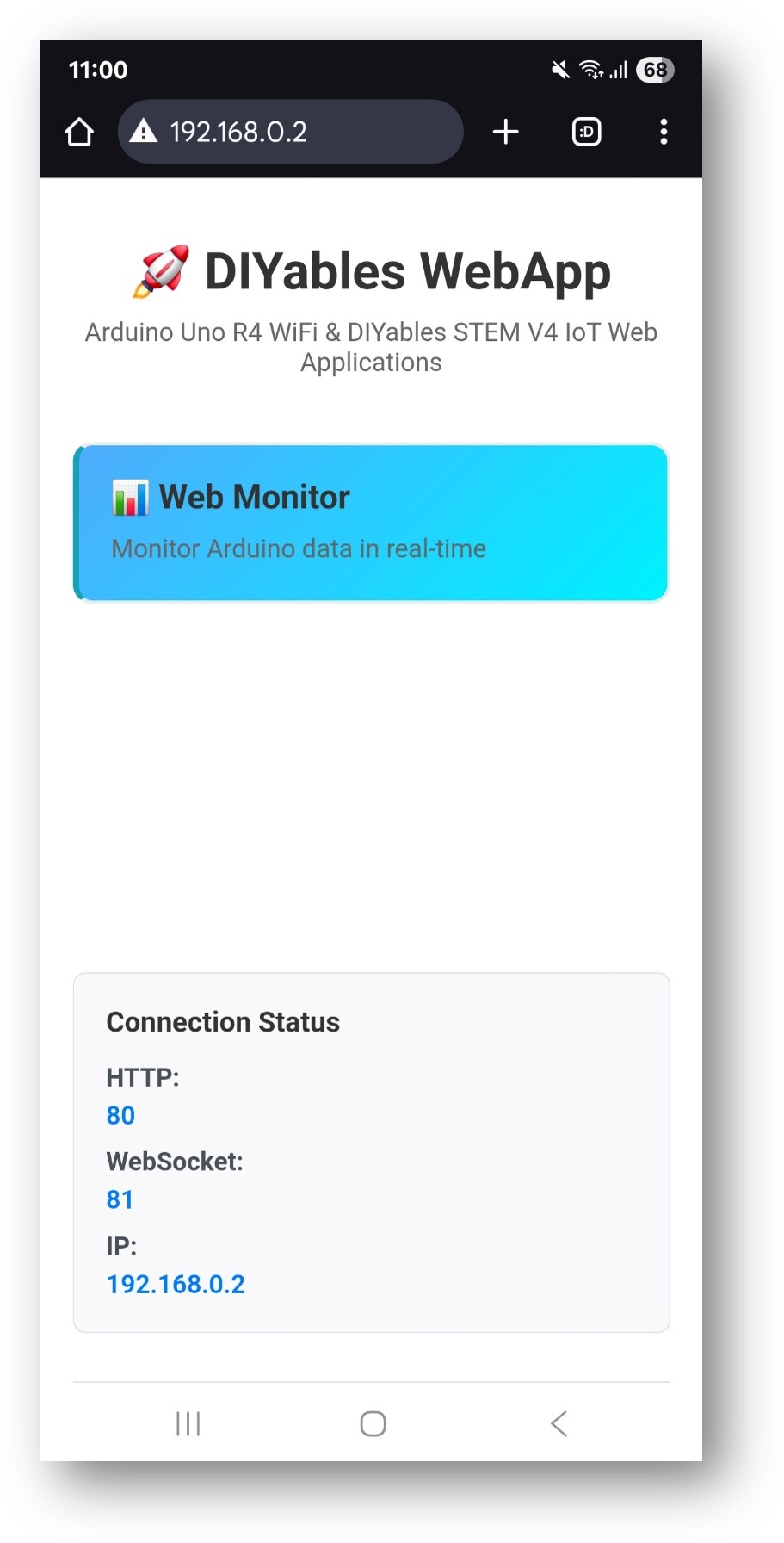
- Klik op de Web Monitor link, u ziet de Web Monitor app's UI zoals hieronder:
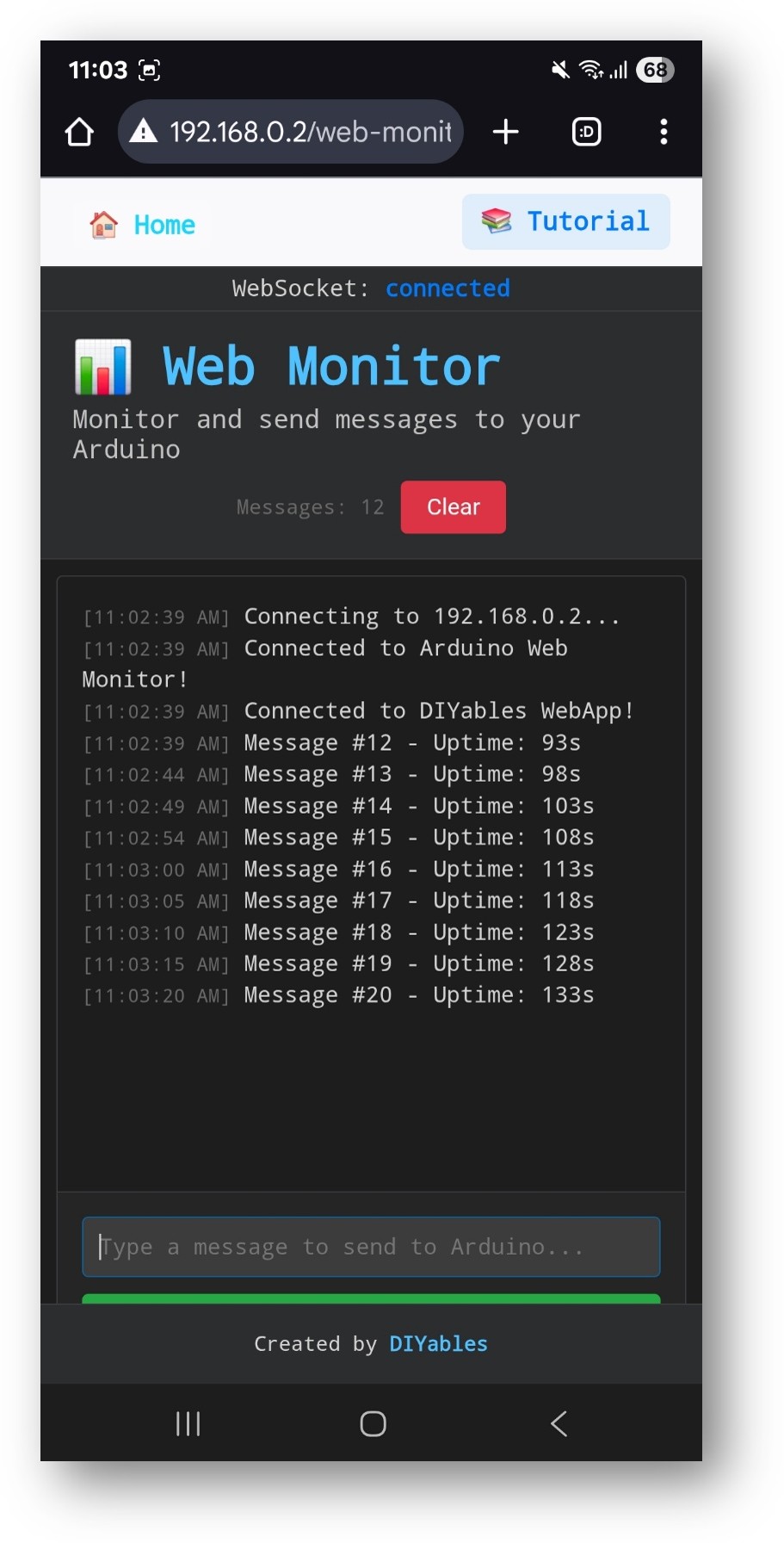
- Of u kunt ook direct toegang krijgen tot de pagina via IP-adres gevolgd door /web-monitor. Bijvoorbeeld: http://192.168.0.2/web-monitor
- Probeer commando's naar uw Arduino te sturen via de web monitor interface en bekijk realtime seriële uitvoer van uw Arduino.
Hoe Te Gebruiken
Seriële Uitvoer Bekijken
- Open de web monitor interface
- Arduino stuurt automatisch statusberichten elke 5 seconden
- Alle Serial.println() uitvoer verschijnt in de monitor
- Berichten krijgen automatisch tijdstempels
Commando's Sturen
- Typ commando's in het invoerveld onderaan
- Druk op Enter of klik op Send knop
- Arduino verwerkt het commando en reageert
Ingebouwde Commando's
Het voorbeeld bevat deze demonstratie commando's:
LED Besturing
- "led on" → Zet ingebouwde LED aan
- "led off" → Zet ingebouwde LED uit
- "led toggle" → Schakelt LED status om
- "blink" → Knippert LED 3 keer
Systeem Commando's
- "status" → Toont Arduino status en uptime
- "help" → Toont beschikbare commando's
- "reset counter" → Reset berichtenteller
- "memory" → Toont vrije geheugen informatie
Debug Commando's
- "test" → Stuurt testbericht
- "echo [bericht]" → Stuurt uw bericht terug
- "repeat [n] [bericht]" → Herhaalt bericht n keer
Interface Functies
Toetsenbord Snelkoppelingen
- Enter → Stuur commando
- ↑/↓ Pijltjestoetsen → Navigeer door commando geschiedenis
- Ctrl+L → Wis monitor (indien geïmplementeerd)
- Ctrl+A → Selecteer alle tekst
Monitor Besturingselementen
- Auto-scroll → Scrolt automatisch naar nieuwe berichten
- Clear → Wist de monitor weergave
- Copy → Kopieer geselecteerde tekst naar klembord
Creatieve Aanpassing - Bouw Uw Geavanceerde Debugging Tool
Breid dit web monitor voorbeeld uit om een krachtige debugging en besturingsinterface voor uw projecten te creëren! Voeg aangepaste commando's, sensor monitoring, en realtime data visualisatie toe om aan uw creatieve behoeften te voldoen.
Code Structuur
Hoofdcomponenten
- WebApp Server: Behandelt HTTP en WebSocket verbindingen
- Monitor Pagina: Biedt terminal-stijl web interface
- Bericht Handler: Verwerkt inkomende commando's
- Seriële Bridge: Stuurt Seriële uitvoer door naar web interface
Belangrijke Functies
Aangepaste Commando's Toevoegen
Om nieuwe commando's toe te voegen, wijzig de handleWebCommand functie:
Praktische Toepassingen
Ontwikkeling en Debugging
Externe Systeem Monitoring
Configuratie Beheer
Geavanceerde Functies
Bericht Filtering
Voeg berichttypen en filtering toe:
Commando Parsing
Implementeer geavanceerde commando parsing:
Data Logging
Log monitor data naar SD-kaart of EEPROM:
Probleemoplossing
Veelvoorkomende Problemen
1. Geen uitvoer in web monitor
- Controleer of Serial.begin() wordt aangeroepen in setup()
- Verifieer WebSocket verbinding (groene status indicator)
- Controleer browser console voor fouten
2. Commando's werken niet
- Zorg ervoor dat commando's exact zijn zoals gespecificeerd
- Controleer hoofdlettergevoeligheid van commando's
- Zoek naar antwoordberichten in monitor
3. Interface laadt langzaam
- Controleer WiFi signaalsterkte
- Reduceer berichtfrequentie
- Wis browser cache
4. WebSocket verbindingsonderbrekingen
- Controleer netwerkstabiliteit
- Reduceer berichtgrootte
- Implementeer herverbindingslogica
Debug Tips
Schakel gedetailleerde debugging in:
Monitor WebSocket status:
Beveiligingsoverwegingen
Commando Validatie
Valideer altijd inkomende commando's:
Toegangscontrole
Implementeer basis authenticatie:
Integratie Voorbeelden
Sensor Monitoring Systeem
Huisautomatisering Monitor
Volgende Stappen
Na het beheersen van het WebMonitor voorbeeld, probeer:
- Chat - Voor interactieve communicatie
- DigitalPins - Voor het besturen van uitgangen
- Slider - Voor analoge waarde controle
- MultipleWebApps - Combinatie van monitoring met besturing
Ondersteuning
Voor extra hulp:
- Bekijk de API Reference documentatie
- Bezoek DIYables tutorials: https://newbiely.com/tutorials/arduino-uno-r4/arduino-uno-r4-diyables-webapps
- Arduino community forums
Gerelateerde Tutorials
📱 Aanbevolen apps
 English for KidsSpelenderwijs Engels leren voor jonge kinderen.Ontdek het opGoogle PlayBeschikbaar in deApp Store
 Bubble NoteZelfverwijderende notities – schrijf ze als berichten.Ontdek het opGoogle PlayBeschikbaar in deApp Store
 Didn't BuyVersla impulsaankopen en bespaar meer.Ontdek het opGoogle PlayBeschikbaar in deApp Store
 Knowledge PathOefentoetsen om alles te leren.Ontdek het opGoogle PlayBeschikbaar in deApp Store