
ESP32 - DHT11 - OLED
Deze tutorial laat u zien hoe u de temperatuur en luchtvochtigheid leest met het DHT11 module en deze weergeeft op een OLED-scherm.
Hardware Benodigd
Of u kunt de volgende kits kopen:
| 1 | × | DIYables ESP32 Starterskit (ESP32 inbegrepen) | |
| 1 | × | DIYables Sensorkit (18 sensoren/displays) |
Aankoopadvies: Als u een groter OLED-display wilt, gebruik dan de 2.42 inch OLED Display 128x64.
Over OLED scherm en DHT11 Temperatuur en Luchtvochtigheid Sensor
Als u niet bekend bent met OLED schermen en de DHT11 temperatuur en luchtvochtigheid sensor (pinout, werking, programmeren ...), leer er meer over in de volgende tutorials:
- ESP32 - OLED tutorial
- ESP32 - DHT11 tutorial
Bedradingsschema
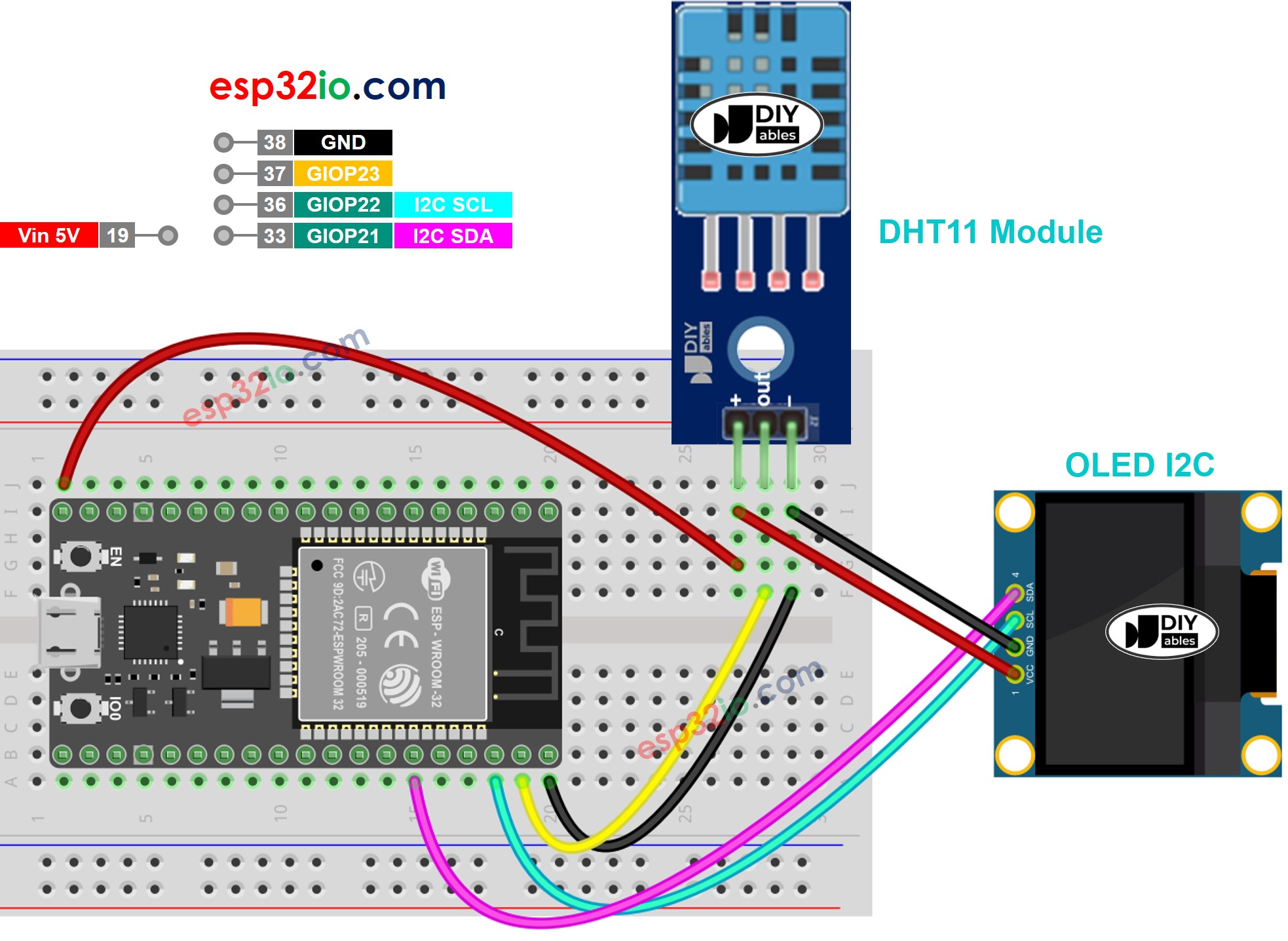
Deze afbeelding is gemaakt met Fritzing. Klik om de afbeelding te vergroten.
Als u niet weet hoe u ESP32 en andere componenten van stroom moet voorzien, vindt u instructies in de volgende tutorial: Hoe ESP32 van stroom te voorzien.
ESP32 Code - DHT11 Sensor - OLED
Snelle Stappen
- Als u voor het eerst ESP32 gebruikt, bekijk dan hoe u de omgeving voor ESP32 instelt in Arduino IDE.
- Maak de bedrading volgens de afbeelding hierboven.
- Verbind de ESP32 board met uw pc via een micro USB-kabel.
- Open Arduino IDE op uw pc.
- Selecteer het juiste ESP32 board (bijv. ESP32 Dev Module) en COM-poort.
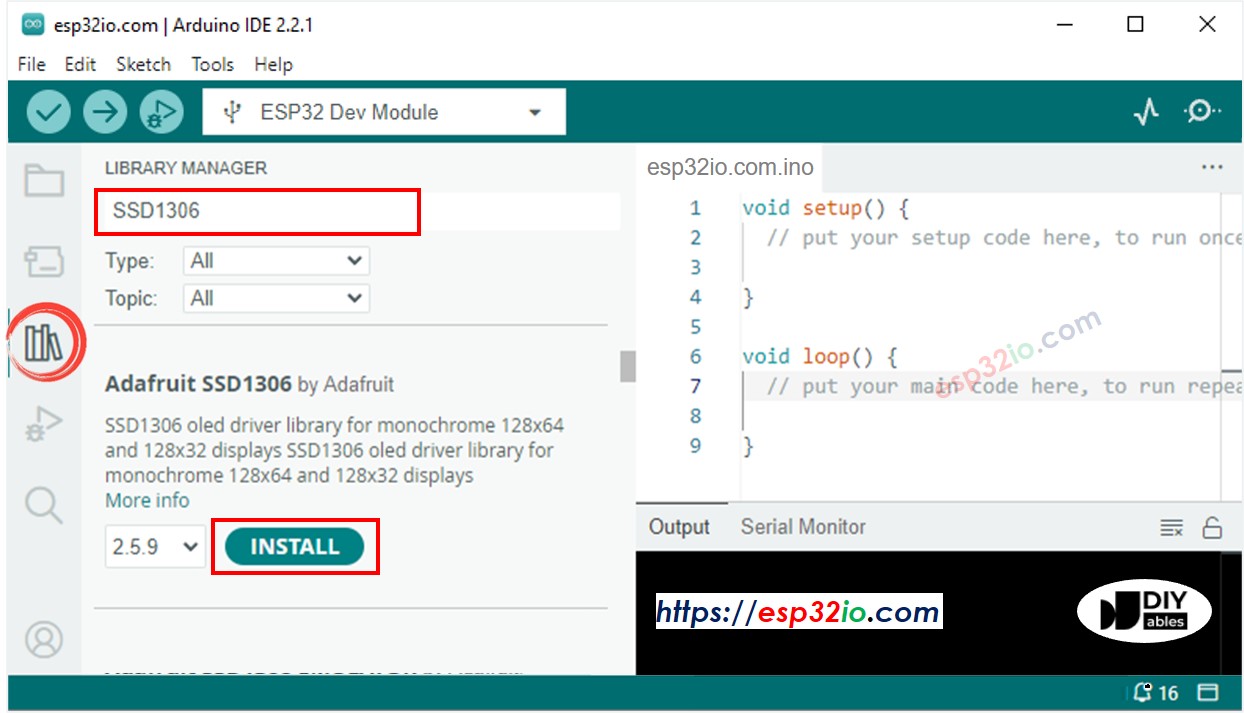
- Klik op het Libraries icoon in de linker zijbalk van Arduino IDE.
- Zoek op “SSD1306”, en vind de SSD1306 bibliotheek van Adafruit.
- Klik op de knop Install om de bibliotheek te installeren.
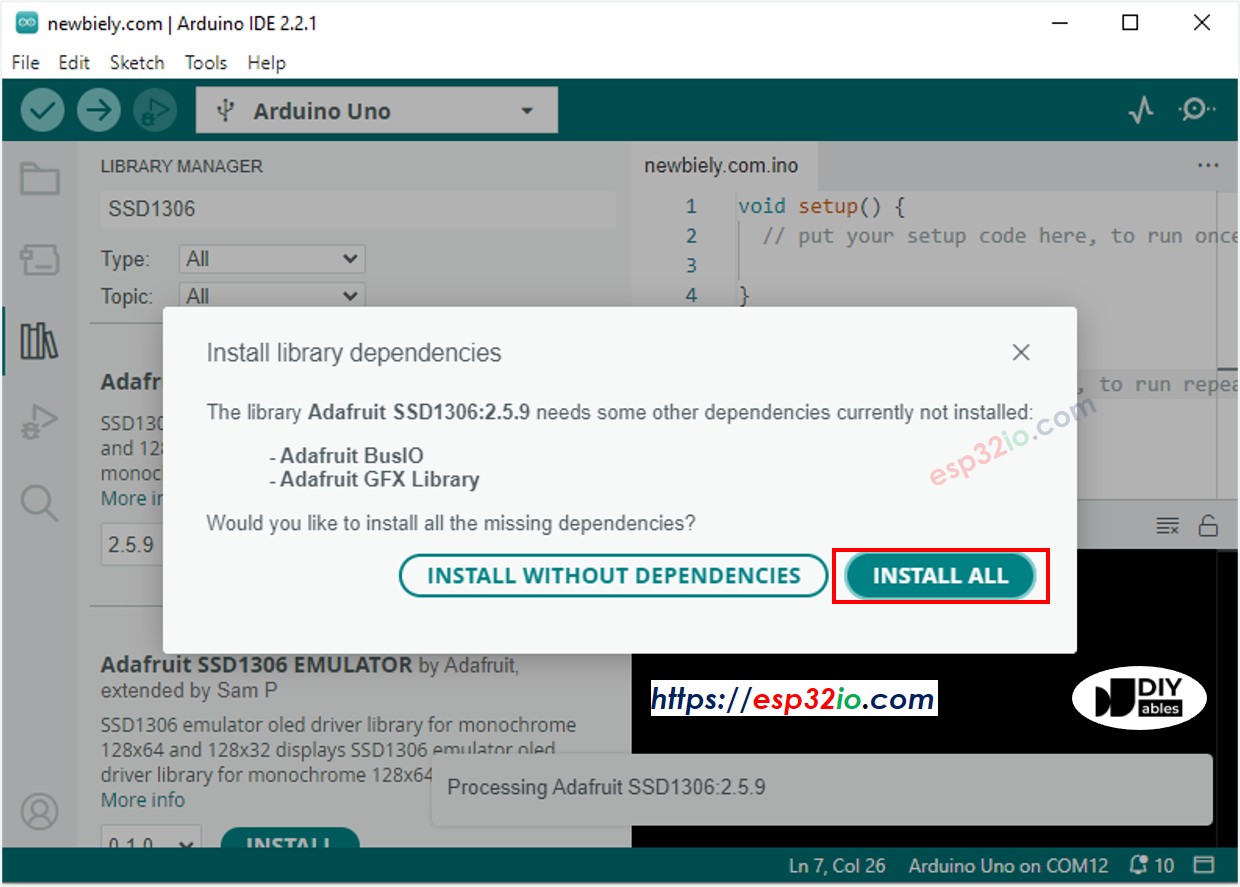
- Er wordt gevraagd om enkele aanvullende bibliotheekafhankelijkheden te installeren.
- Klik op Install All om alle afhankelijkheden te installeren.
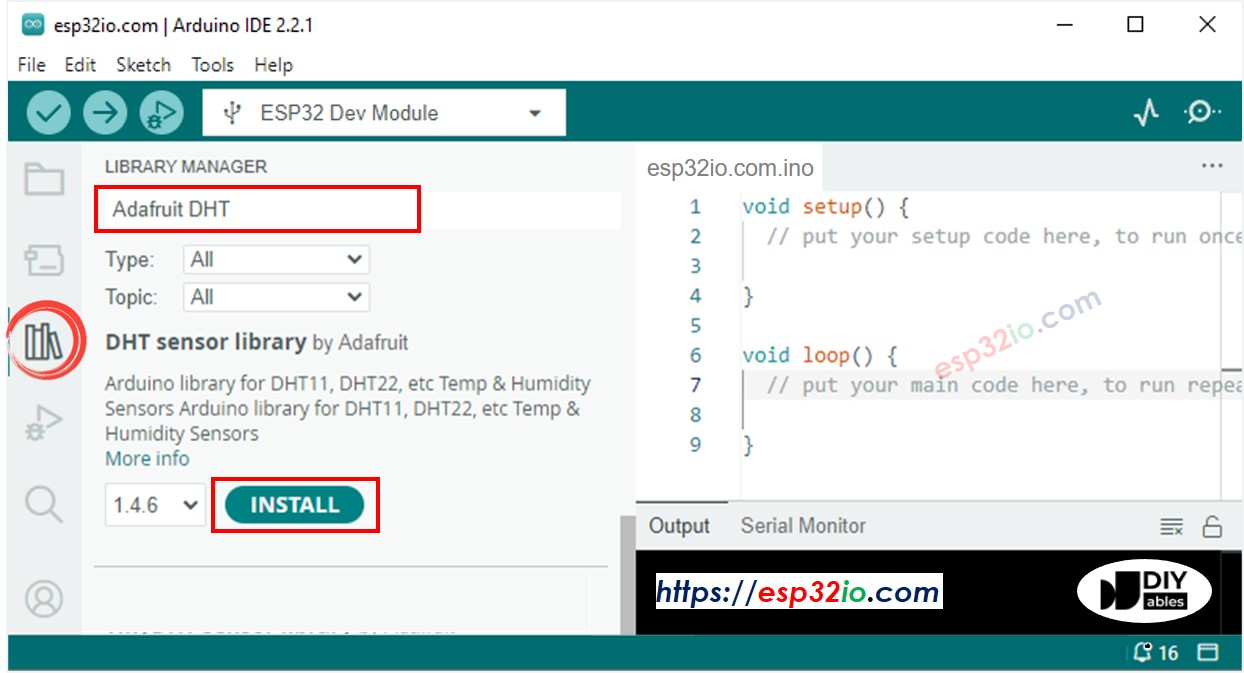
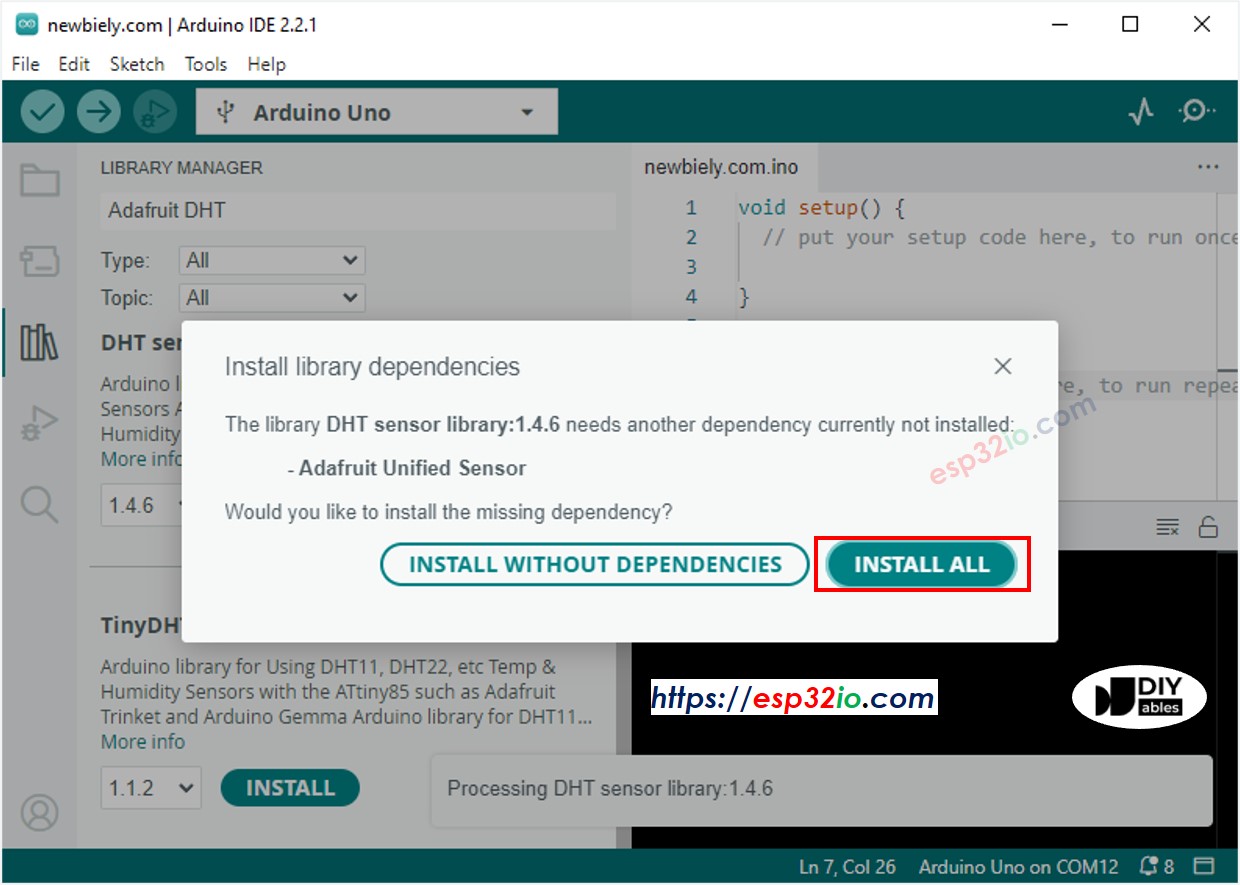
- Zoek op “DHT”, en vind de DHT sensor bibliotheek van Adafruit.
- Klik op Install om de bibliotheek te installeren.
- Er wordt gevraagd om enkele aanvullende bibliotheekafhankelijkheden te installeren.
- Klik op Install All om alle afhankelijkheden te installeren.
- Kopieer de bovenstaande code en open deze in Arduino IDE.
- Klik op de knop Upload in Arduino IDE om de code naar ESP32 te uploaden.
- Plaats de sensor in warm en koud water, of houd de sensor in uw hand.
- Bekijk het resultaat op het OLED-scherm en in de Seriële Monitor.
※ Notiz:
De bovenstaande code centreert automatisch horizontaal en verticaal de tekst op het OLED-scherm.
Video Tutorial
We overwegen het maken van videotutorials. Als u videotutorials belangrijk vindt, abonneer u dan op ons YouTube-kanaal om ons te motiveren de video's te maken.
Gerelateerde Tutorials
📱 Aanbevolen apps
 English for KidsSpelenderwijs Engels leren voor jonge kinderen.Ontdek het opGoogle PlayBeschikbaar in deApp Store
 Bubble NoteZelfverwijderende notities – schrijf ze als berichten.Ontdek het opGoogle PlayBeschikbaar in deApp Store
 Didn't BuyVersla impulsaankopen en bespaar meer.Ontdek het opGoogle PlayBeschikbaar in deApp Store
 Knowledge PathOefentoetsen om alles te leren.Ontdek het opGoogle PlayBeschikbaar in deApp Store