
ESP32 - Stappenmotor en Endschakelaar
In deze ESP32 tutorial verkennen we het gebruik van de ESP32, een endschakelaar (limit switch), de L298N driver en een stappenmotor. Specifiek behandelen we:
- Het stoppen van de stappenmotor wanneer een endschakelaar wordt aangeraakt.
- Het wijzigen van de draairichting van de stappenmotor wanneer een endschakelaar wordt geactiveerd.
- Het wijzigen van de draairichting van de stappenmotor wanneer twee endschakelaars worden geactiveerd.
Deze onderwerpen stellen u in staat om gecontroleerde en veelzijdige bewegingsapplicaties te maken met uw ESP32.
Hardware Benodigd
Of u kunt de volgende kits kopen:
| 1 | × | DIYables ESP32 Starterskit (ESP32 inbegrepen) | |
| 1 | × | DIYables Sensorkit (18 sensoren/displays) |
Over Stappenmotor en Endschakelaar
Als u niet bekend bent met de stappenmotor en endschakelaar (pinout, werking, programmeren, enz.), leer hier meer via de volgende tutorials:
- ESP32 - Endschakelaar tutorial
- ESP32 - Stappenmotor aansturen tutorial
Aansluitschema
Deze tutorial bevat ESP32 code voor twee situaties: Eén stappenmotor + één endschakelaar en één stappenmotor + twee endschakelaars.
- Aansluitschema tussen de stappenmotor en één endschakelaar
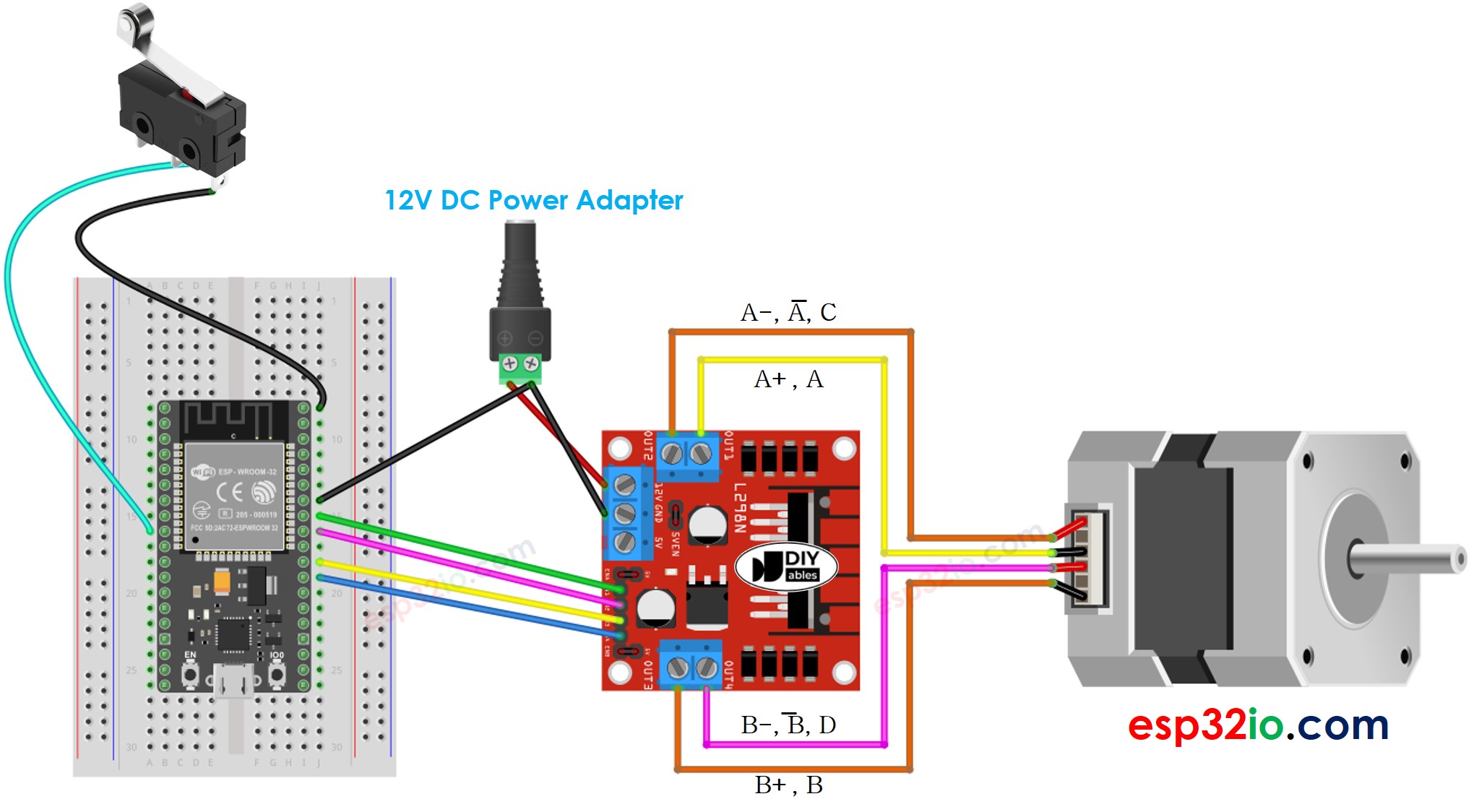
Deze afbeelding is gemaakt met Fritzing. Klik om de afbeelding te vergroten.
Als u niet weet hoe u ESP32 en andere componenten van stroom moet voorzien, vindt u instructies in de volgende tutorial: Hoe ESP32 van stroom te voorzien.
- Aansluitschema tussen de stappenmotor en twee endschakelaars
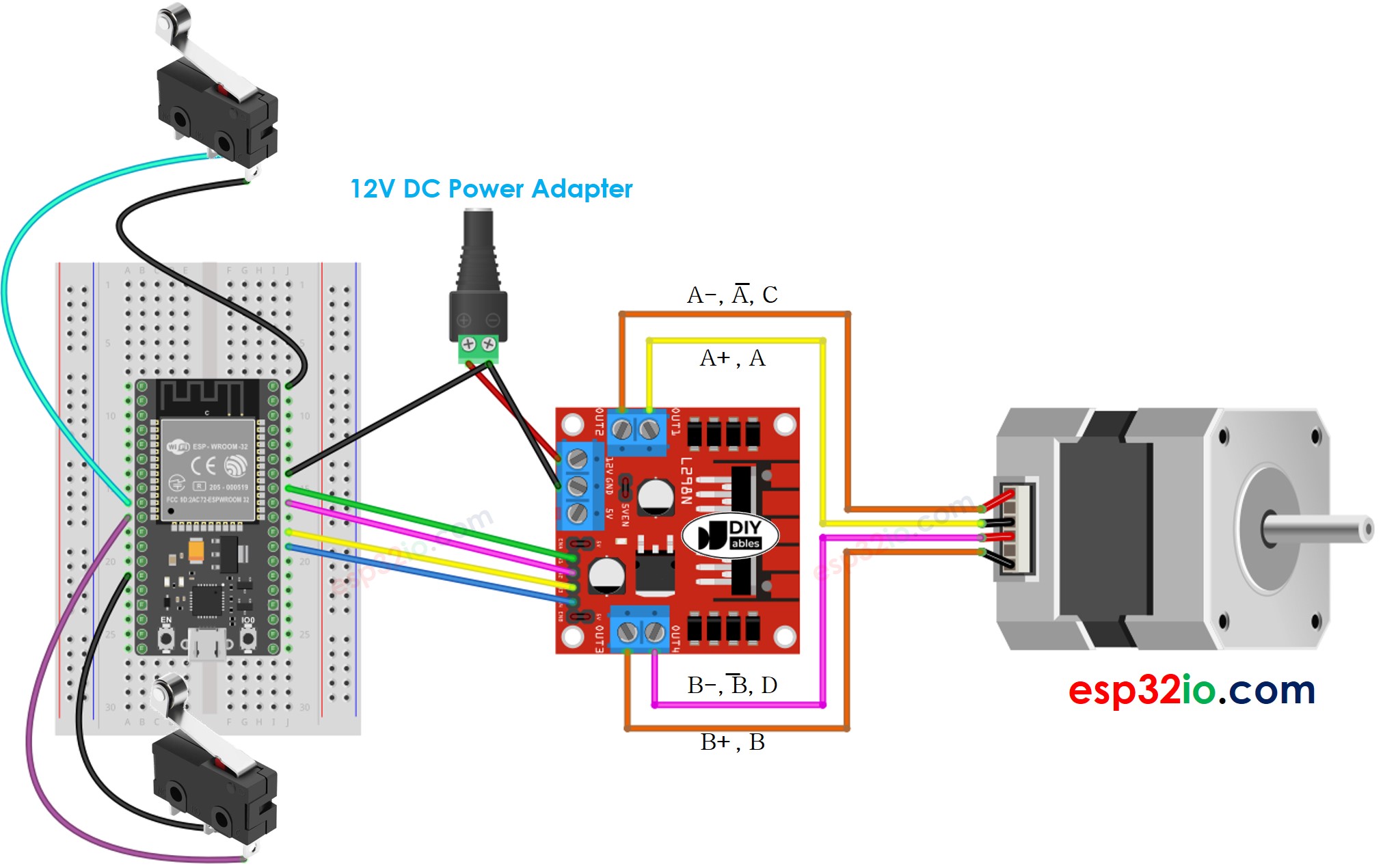
Deze afbeelding is gemaakt met Fritzing. Klik om de afbeelding te vergroten.
※ Notiz:
Afhankelijk van de stappenmotor kan de aansluiting tussen de stappenmotor en de L298N verschillen. Bekijk alstublieft deze ESP32 - Stappenmotor tutorial goed om te zien hoe u de stappenmotor op de L298N motor driver aansluit.
ESP32 Code - Stappenmotor Stoppen met een Endschakelaar
Er zijn meerdere manieren om een stappenmotor te stoppen:
- De functie stepper.stop() aanroepen: Hiermee stopt de stappenmotor niet onmiddellijk, maar geleidelijk
- De functie stepper.run() niet aanroepen: Hiermee stopt de stappenmotor onmiddelijk
De onderstaande code zorgt ervoor dat de stappenmotor oneindig draait en direct stopt wanneer een endschakelaar wordt geactiveerd.
Snelle Stappen
- Als dit de eerste keer is dat u met ESP32 werkt, bekijk dan hoe u de omgeving instelt voor ESP32 in Arduino IDE.
- Maak de bekabeling zoals op bovenstaande afbeelding.
- Verbind de ESP32 met uw PC via een micro USB-kabel
- Open Arduino IDE op uw PC.
- Selecteer het juiste ESP32 board (bijvoorbeeld ESP32 Dev Module) en de juiste COM-poort.
- Verbind ESP32 met de PC via USB-kabel
- Open de Arduino IDE, selecteer het juiste board en poort
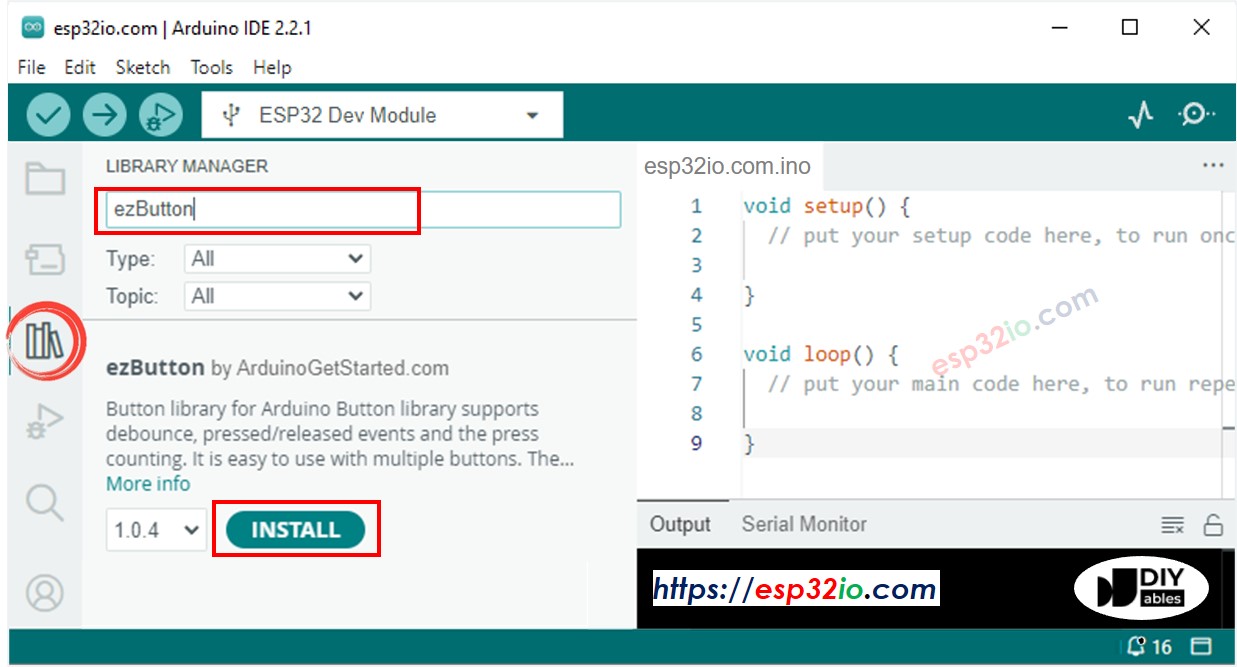
- Klik op het Libraries icoon in de linker zijbalk van de Arduino IDE.
- Zoek op “ezButton”, en vind de button library van ArduinoGetStarted.com
- Klik op de Install knop om de ezButton library te installeren.
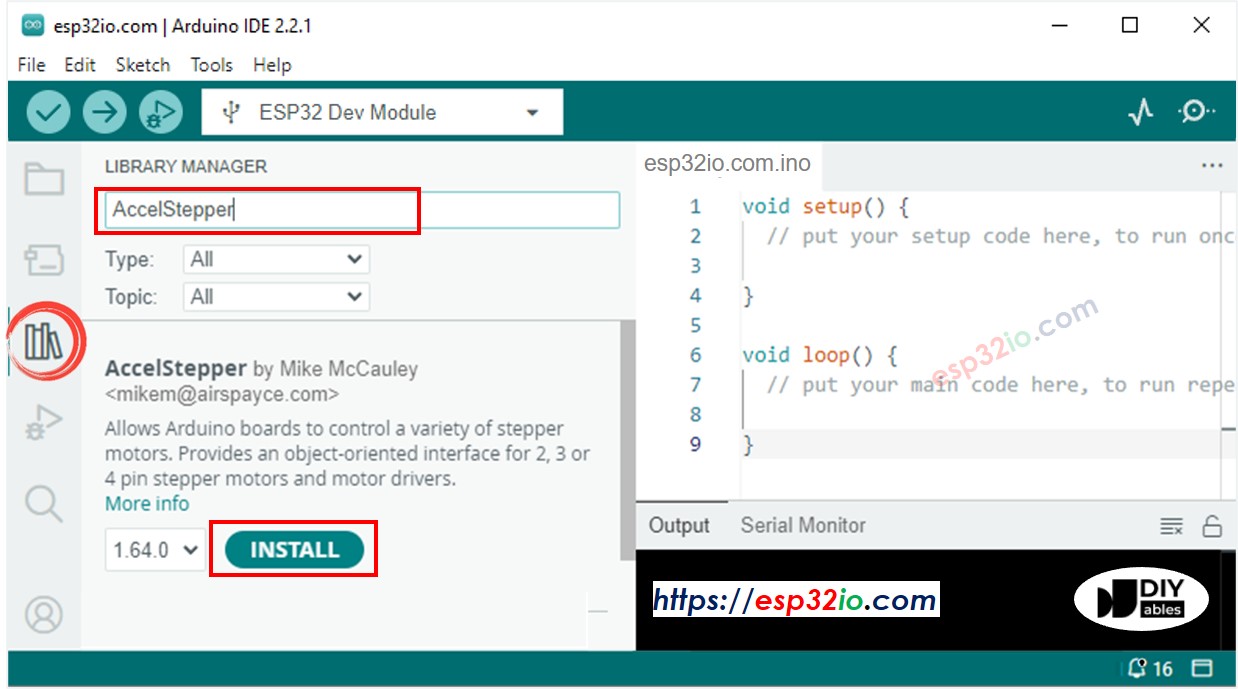
- Zoek op “AccelStepper”, en vind de AccelStepper library van Mike McCauley
- Klik op de Install knop om de AccelStepper library te installeren.
- Kopieer bovenstaande code en open deze in Arduino IDE
- Klik op de Upload knop in Arduino IDE om de code op ESP32 te laden
- Als de verbinding correct is, zult u zien dat de motor met de klok mee draait.
- Raak de endschakelaar aan
- U zult zien dat de motor onmiddellijk stopt
- Het resultaat in de Serial Monitor ziet er als volgt uit
Code-uitleg
Lees de regel-voor-regel uitleg in de commentaren van de code!
ESP32 Code - Draairichting Stappenmotor Wijzigen met een Endschakelaar
De onderstaande code laat de stappenmotor oneindig draaien en wisselt de draairichting zodra een endschakelaar wordt geactiveerd.
Snelle Stappen
- Kopieer bovenstaande code en open deze in Arduino IDE
- Klik op de Upload knop in Arduino IDE om de code op ESP32 te laden
- Als de bekabeling correct is, zult u zien dat de motor met de klok mee draait.
- Raak de endschakelaar aan
- U zult zien dat de draairichting van de stappenmotor wijzigt naar tegen de klok in
- Raak de endschakelaar opnieuw aan
- U zult zien dat de draairichting van de stappenmotor weer wijzigt naar met de klok mee
- Het resultaat in de Serial Monitor ziet er als volgt uit
ESP32 Code - Draairichting Stappenmotor Wijzigen met twee Endschakelaars
De onderstaande code laat de stappenmotor oneindig draaien en wisselt de draairichting zodra één van twee endschakelaars wordt geactiveerd.
Snelle Stappen
- Kopieer bovenstaande code en open deze in Arduino IDE
- Klik op de Upload knop in Arduino IDE om de code op ESP32 te laden
- Als de bekabeling correct is, zult u zien dat de motor met de klok mee draait.
- Raak endschakelaar 1 aan
- U zult zien dat de draairichting van de stappenmotor wijzigt naar tegen de klok in
- Raak endschakelaar 2 aan
- U zult zien dat de draairichting van de stappenmotor wijzigt naar met de klok mee
- Het resultaat in de Serial Monitor ziet er als volgt uit
Video Tutorial
We overwegen het maken van videotutorials. Als u videotutorials belangrijk vindt, abonneer u dan op ons YouTube-kanaal om ons te motiveren de video's te maken.
Bekijk onze video-tutorial voor een visuele begeleiding bij dit project! De video biedt extra inzichten en helpt u bij elke stap om het met ESP32, stappenmotor en endschakelaar te realiseren.
Gerelateerde Tutorials
📱 Aanbevolen apps
 English for KidsSpelenderwijs Engels leren voor jonge kinderen.Ontdek het opGoogle PlayBeschikbaar in deApp Store
 Bubble NoteZelfverwijderende notities – schrijf ze als berichten.Ontdek het opGoogle PlayBeschikbaar in deApp Store
 Didn't BuyVersla impulsaankopen en bespaar meer.Ontdek het opGoogle PlayBeschikbaar in deApp Store
 Knowledge PathOefentoetsen om alles te leren.Ontdek het opGoogle PlayBeschikbaar in deApp Store