Arduino - Temperatuur- en Vochtigheidssensor - OLED Display

In deze tutorial leert u:

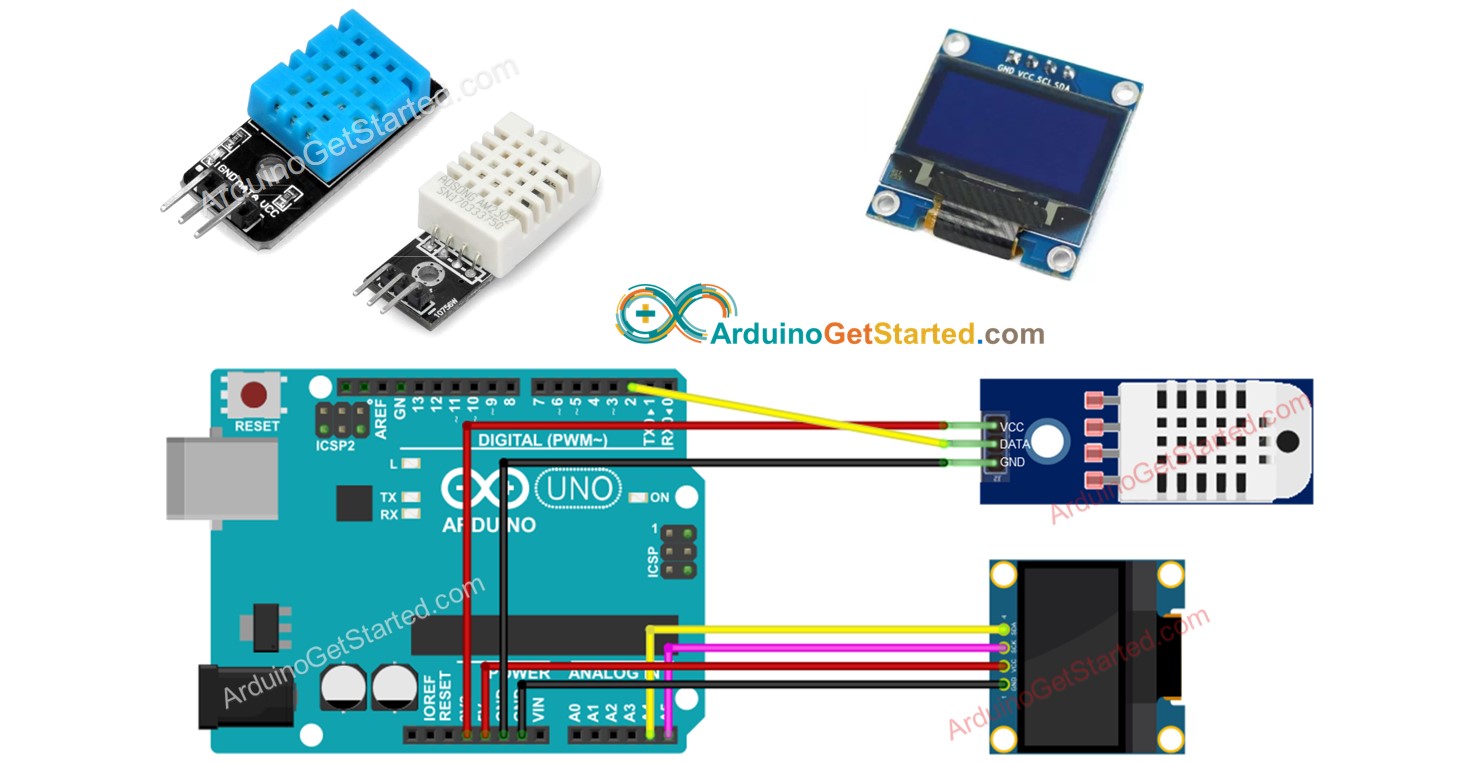
Arduino DHT11/DHT22 temperatuur- en vochtigheidsensor OLED display

Hardware Benodigd

1×Arduino Uno R3
1×USB 2.0 kabel type A/B
1×SSD1306 I2C OLED-Display 128x64
1×SSD1306 I2C OLED-Display 128x32
1×DHT11 Temperatuur- en Vochtigheidssensor
1×Jumper kabels

U kunt ook de DHT22 sensor gebruiken in plaats van de DHT11 sensor.

1×(Aanbevolen) Schroefklem Block Shield voor Arduino Uno
1×(Aanbevolen) Breadboard-Shield voor Arduino Uno
1×(Aanbevolen) Behuizing voor Arduino Uno
1×(Aanbevolen) Prototyping Basisplaat & Breadboard Kit voor Arduino Uno

Of u kunt de volgende kits kopen:

1×DIYables STEM V3 Starterskit (Arduino inbegrepen)
1×DIYables Sensorkit (30 sensoren/displays)
1×DIYables Sensorkit (18 sensoren/displays)
Openbaarmaking: Sommige van de links in deze sectie zijn Amazon-affiliate links. We kunnen een commissie ontvangen voor aankopen die via deze links worden gedaan, zonder extra kosten voor u. We waarderen uw steun.

Over OLED Display, DHT11 en DHT22 Temperatuur- en Vochtigheidssensor

Als u nog niet bekend bent met het OLED-display, de DHT11 en DHT22 temperatuur- en vochtigheidssensor (pinout, werking, programmeren ...), leer er dan meer over in de volgende tutorials:

Bedradingsschema

Arduino - DHT11 Module LCD Bedrading
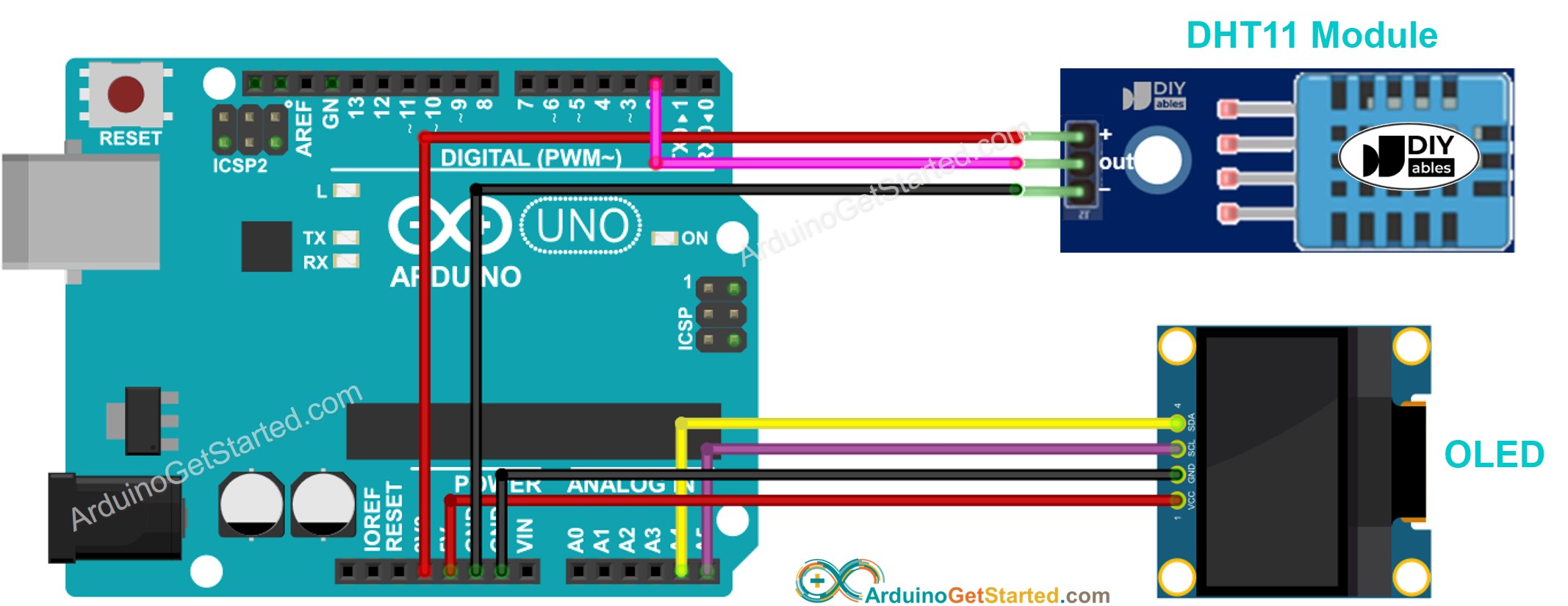
Arduino DHT11 Sensor OLED Bedradingsschema

This image is created using Fritzing. Click to enlarge image

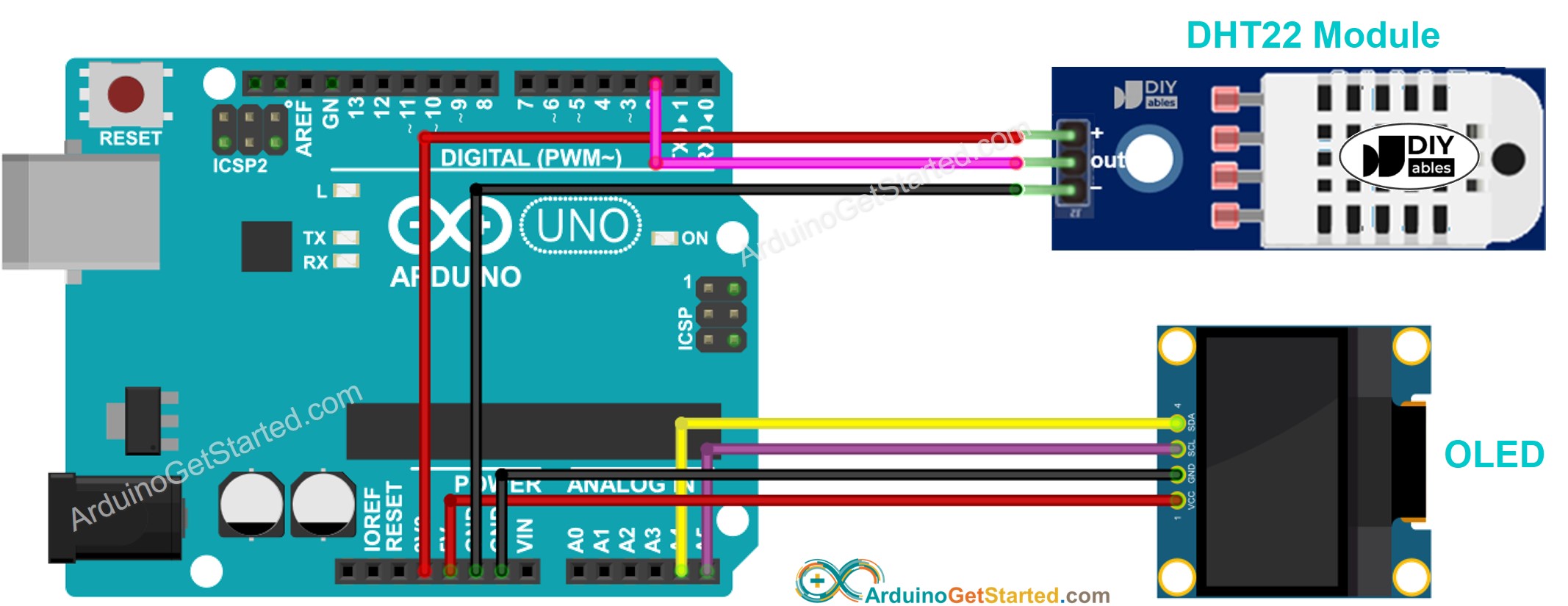
Arduino - DHT22 Module LCD Bedrading

Arduino DHT22 Sensor OLED Bedradingsschema

This image is created using Fritzing. Click to enlarge image

Arduino Code - DHT11 Sensor - OLED

/* * Deze Arduino code is ontwikkeld door newbiely.nl * Deze Arduino code wordt zonder enige beperking aan het publiek beschikbaar gesteld. * Voor volledige instructies en schema's, bezoek: * https://newbiely.nl/tutorials/arduino/arduino-temperature-humidity-sensor-oled-display */ #include <Wire.h> #include <Adafruit_GFX.h> #include <Adafruit_SSD1306.h> #include <DHT.h> #define SCREEN_WIDTH 128 // OLED display width, in pixels #define SCREEN_HEIGHT 64 // OLED display height, in pixels #define DHTPIN 2 // pin connected to DHT11 sensor #define DHTTYPE DHT11 Adafruit_SSD1306 oled(SCREEN_WIDTH, SCREEN_HEIGHT, &Wire, -1); // create SSD1306 display object connected to I2C DHT dht(DHTPIN, DHTTYPE); String temperature; String humidity; void setup() { Serial.begin(9600); // initialize OLED display with address 0x3C for 128x64 if (!oled.begin(SSD1306_SWITCHCAPVCC, 0x3C)) { Serial.println(F("SSD1306 allocation failed")); while (true) ; } delay(2000); // wait for initializing oled.clearDisplay(); // clear display oled.setTextSize(3); // text size oled.setTextColor(WHITE); // text color oled.setCursor(0, 10); // position to display dht.begin(); // initialize DHT11 the temperature and humidity sensor temperature.reserve(10); // to avoid fragmenting memory when using String humidity.reserve(10); // to avoid fragmenting memory when using String } void loop() { float humi = dht.readHumidity(); // read humidity float tempC = dht.readTemperature(); // read temperature // check if any reads failed if (isnan(humi) || isnan(tempC)) { temperature = "Failed"; humidity = "Failed"; } else { temperature = String(tempC, 1); // one decimal places temperature += char(247); // degree character temperature += "C"; humidity = String(humi, 1); // one decimal places humidity += "%"; } Serial.print(tempC); // print to Serial Monitor Serial.print("°C | " ); // print to Serial Monitor Serial.print(humi); // print to Serial Monitor Serial.println("%"); // print to Serial Monitor oledDisplayCenter(temperature, humidity); // display temperature and humidity on OLED } void oledDisplayCenter(String temperature, String humidity) { int16_t x1; int16_t y1; uint16_t width_T; uint16_t height_T; uint16_t width_H; uint16_t height_H; oled.getTextBounds(temperature, 0, 0, &x1, &y1, &width_T, &height_T); oled.getTextBounds(temperature, 0, 0, &x1, &y1, &width_H, &height_H); // display on horizontal and vertical center oled.clearDisplay(); // clear display oled.setCursor((SCREEN_WIDTH - width_T) / 2, SCREEN_HEIGHT / 2 - height_T - 5); oled.println(temperature); // text to display oled.setCursor((SCREEN_WIDTH - width_H) / 2, SCREEN_HEIGHT / 2 + 5); oled.println(humidity); // text to display oled.display(); }

Snel aan de slag

  • Open de Arduino IDE op uw PC.
  • Navigeer naar het Libraries icoon in de linkerzijbalk van de Arduino IDE.
  • Zoek op “SSD1306” en vind de SSD1306 bibliotheek van Adafruit.
  • Klik op de Installeren knop om de bibliotheek te installeren.
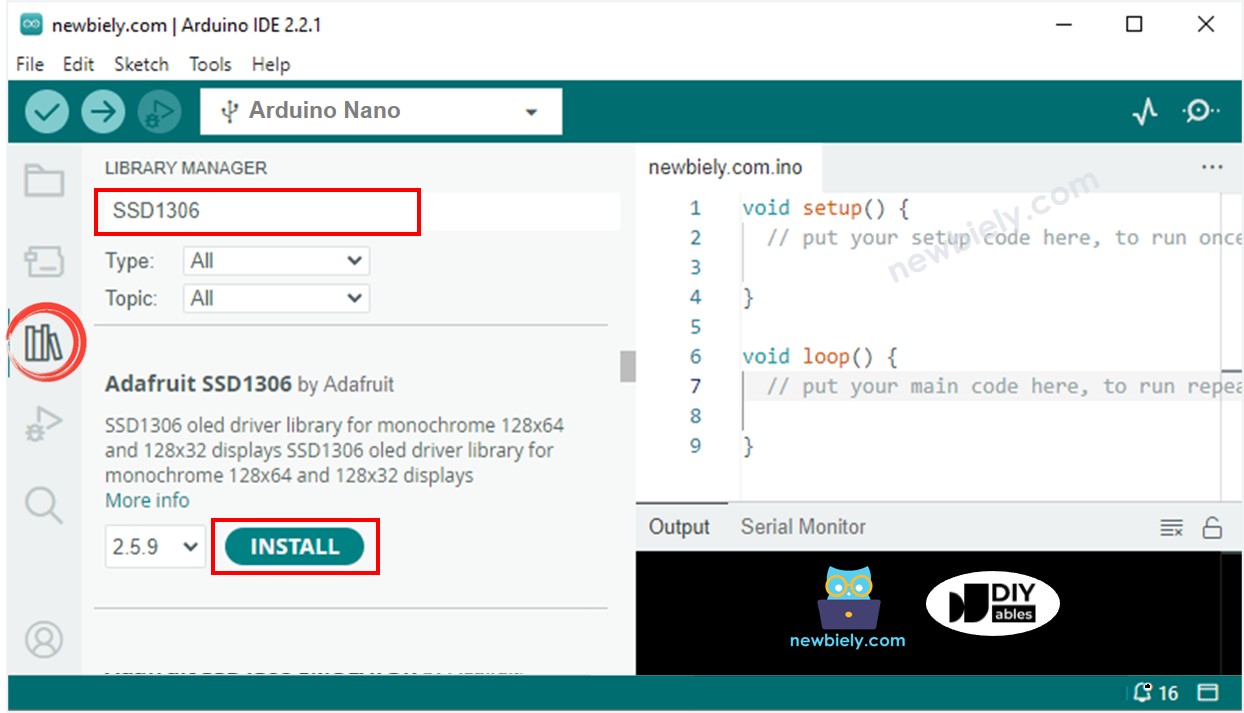
Arduino OLED bibliotheek
  • U wordt gevraagd om aanvullende bibliotheekafhankelijkheden te installeren.
  • Klik op de Alles installeren knop om alle afhankelijkheden te installeren.
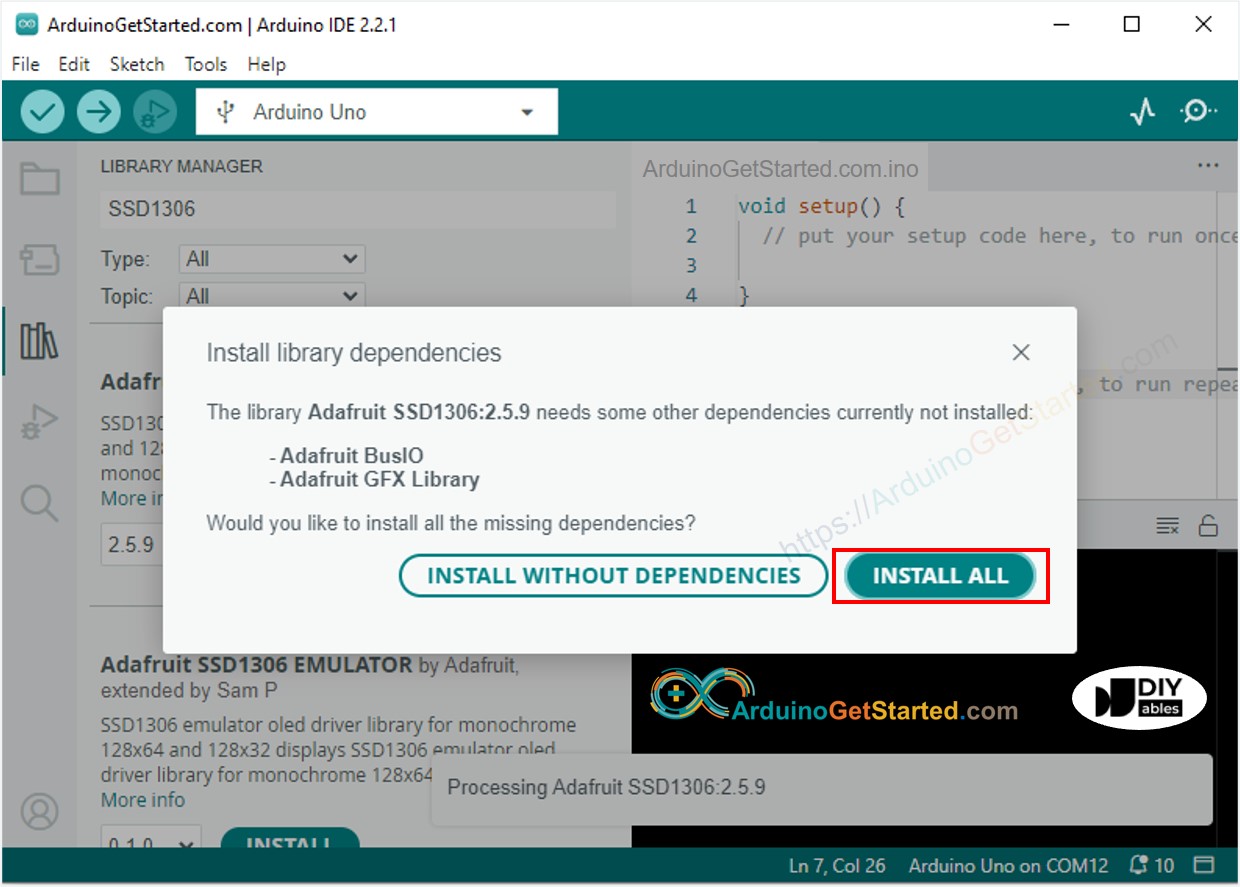
Arduino Adafruit GFX sensor bibliotheek
  • Zoek op “DHT” en vind de DHT sensor bibliotheek van Adafruit.
  • Klik op de Installeren knop om de bibliotheek te installeren.
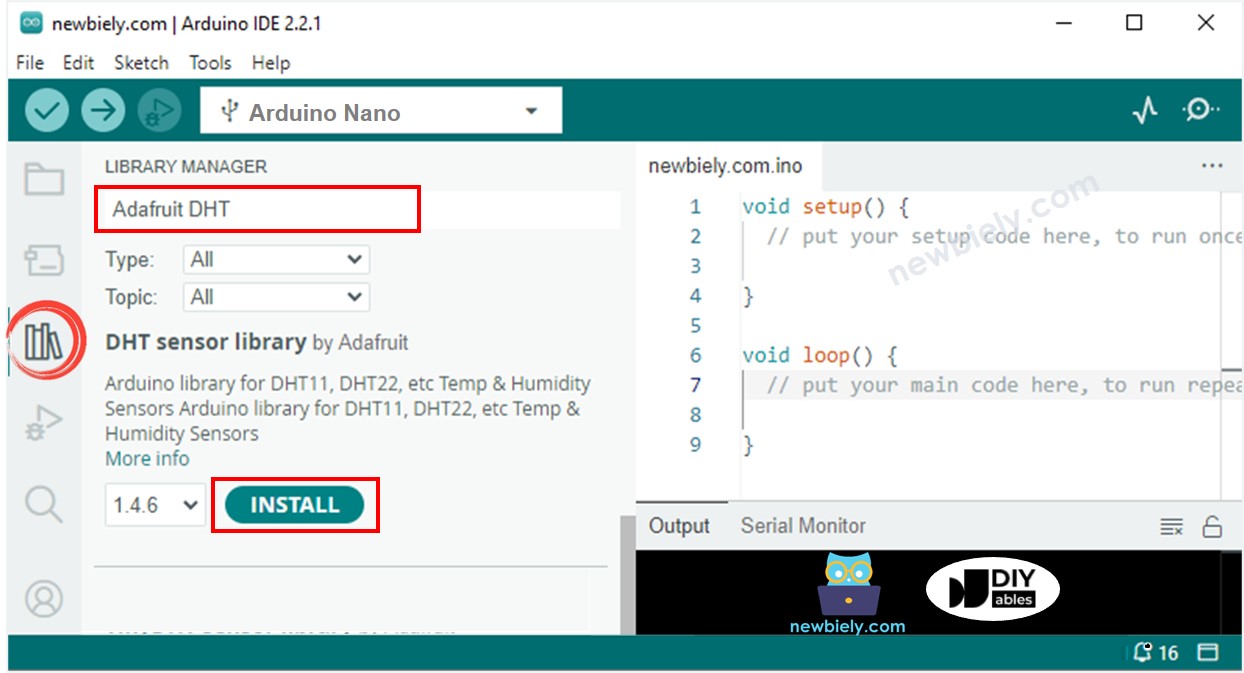
Arduino DHT sensor bibliotheek
  • U wordt gevraagd om aanvullende bibliotheekafhankelijkheden te installeren.
  • Klik op de Alles installeren knop om alle afhankelijkheden te installeren.
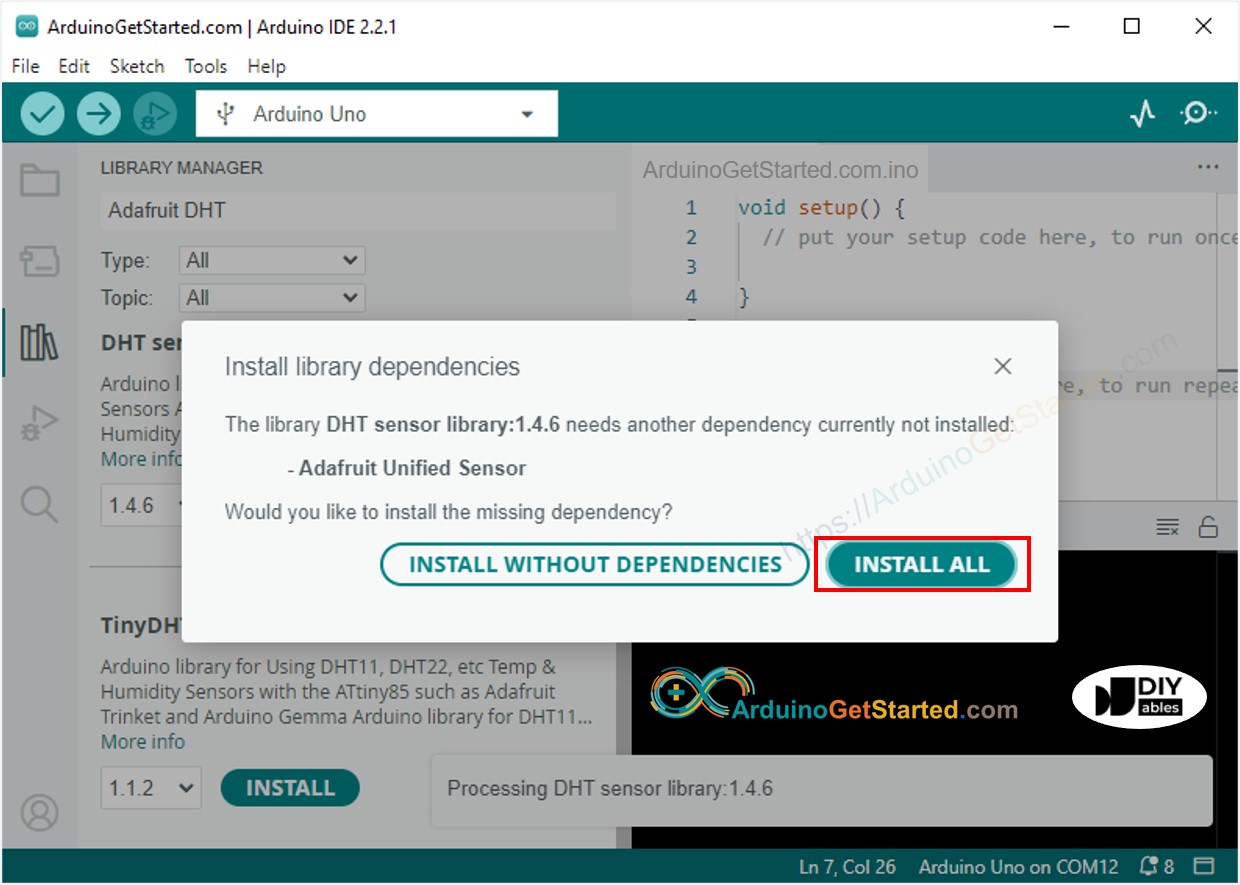
Arduino Adafruit Unified sensor bibliotheek
  • Kopieer de hierboven genoemde code en open deze met de Arduino IDE.
  • Klik op de knop Uploaden in de Arduino IDE om de code naar de Arduino te uploaden.
  • Houd de sensor in warm en koud water, of pak de sensor vast met uw hand.
  • Bekijk het resultaat op het OLED-display en de seriële monitor.

※ Notiz:

De bovenstaande code centreert de tekst horizontaal en verticaal automatisch op het OLED-display.

Arduino Code - DHT22 Sensor - OLED

/* * Deze Arduino code is ontwikkeld door newbiely.nl * Deze Arduino code wordt zonder enige beperking aan het publiek beschikbaar gesteld. * Voor volledige instructies en schema's, bezoek: * https://newbiely.nl/tutorials/arduino/arduino-temperature-humidity-sensor-oled-display */ #include <Wire.h> #include <Adafruit_GFX.h> #include <Adafruit_SSD1306.h> #include <DHT.h> #define SCREEN_WIDTH 128 // OLED display width, in pixels #define SCREEN_HEIGHT 64 // OLED display height, in pixels #define DHTPIN 2 // pin connected to DHT22 sensor #define DHTTYPE DHT22 Adafruit_SSD1306 oled(SCREEN_WIDTH, SCREEN_HEIGHT, &Wire, -1); // create SSD1306 display object connected to I2C DHT dht(DHTPIN, DHTTYPE); String temperature; String humidity; void setup() { Serial.begin(9600); // initialize OLED display with address 0x3C for 128x64 if (!oled.begin(SSD1306_SWITCHCAPVCC, 0x3C)) { Serial.println(F("SSD1306 allocation failed")); while (true) ; } delay(2000); // wait for initializing oled.clearDisplay(); // clear display oled.setTextSize(3); // text size oled.setTextColor(WHITE); // text color oled.setCursor(0, 10); // position to display dht.begin(); // initialize DHT22 the temperature and humidity sensor temperature.reserve(10); // to avoid fragmenting memory when using String humidity.reserve(10); // to avoid fragmenting memory when using String } void loop() { float humi = dht.readHumidity(); // read humidity float tempC = dht.readTemperature(); // read temperature // check if any reads failed if (isnan(humi) || isnan(tempC)) { temperature = "Failed"; humidity = "Failed"; } else { temperature = String(tempC, 1); // one decimal places temperature += char(247); // degree character temperature += "C"; humidity = String(humi, 1); // one decimal places humidity += "%"; Serial.print(tempC); // print to Serial Monitor Serial.print("°C | " ); // print to Serial Monitor Serial.print(humi); // print to Serial Monitor Serial.println("%"); // print to Serial Monitor } oledDisplayCenter(temperature, humidity); // display temperature and humidity on OLED } void oledDisplayCenter(String temperature, String humidity) { int16_t x1; int16_t y1; uint16_t width_T; uint16_t height_T; uint16_t width_H; uint16_t height_H; oled.getTextBounds(temperature, 0, 0, &x1, &y1, &width_T, &height_T); oled.getTextBounds(temperature, 0, 0, &x1, &y1, &width_H, &height_H); // display on horizontal and vertical center oled.clearDisplay(); // clear display oled.setCursor((SCREEN_WIDTH - width_T) / 2, SCREEN_HEIGHT / 2 - height_T - 5); oled.println(temperature); // text to display oled.setCursor((SCREEN_WIDTH - width_H) / 2, SCREEN_HEIGHT / 2 + 5); oled.println(humidity); // text to display oled.display(); }

※ Notiz:

De code voor DHT11 en DHT22 is identiek behalve één regel code. De bibliotheek voor DHT11 en DHT22 is hetzelfde.

Video Tutorial

We overwegen het maken van videotutorials. Als u videotutorials belangrijk vindt, abonneer u dan op ons YouTube-kanaal om ons te motiveren de video's te maken.

※ ONZE BERICHTEN

  • U bent welkom om de link naar deze tutorial te delen. Gebruik onze inhoud echter niet op andere websites. We hebben veel moeite en tijd gestoken in het maken van de inhoud, respecteer alstublieft ons werk!